
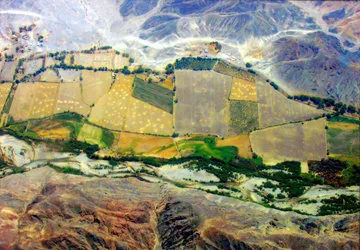
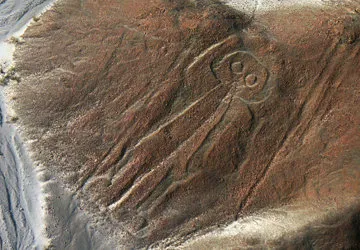
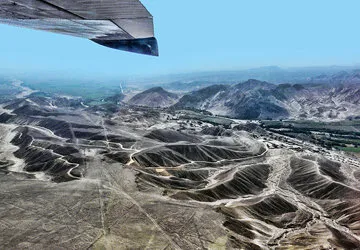

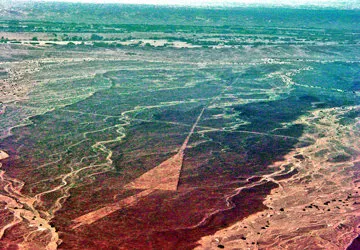
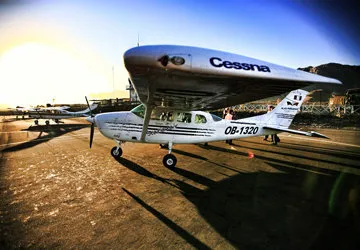
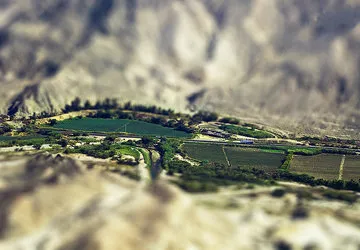
Cover. Flying over the Nazca Lines in Peru.

Ancient Geoglyphs Similar to the Nazca Lines Discovered in Southern Peru

Cover. Flying over the Nazca Lines in Peru.
Flying over the Nazca Valley in Southern Peru
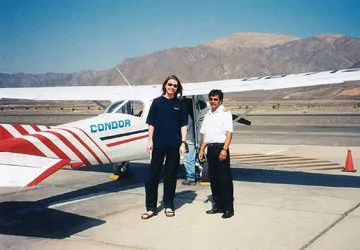
Before flying over the Nazca Lines

Geoglyphs similar to the Nazca Lines have been discovered in the Chincha Valley, the cradle of Afro-Peruvian culture found south of Lima in Ica, the same desert coastal department as the more famous Nazca Lines. A team of archeologists directed by UCLA's Charles Stanish have concluded that these lines predate the Nazca Lines by three centuries....

Geoglyphs similar to the Nazca Lines have been discovered in the Chincha Valley, the cradle of Afro-Peruvian culture found south of Lima in Ica, the same desert coastal department as the more famous Nazca Lines. They extend over an area of 40km2 and consist of linear geoglyphs, circular figures marked by rocks, and ceremonial mounds or settlements. The straight lines converge over the mounds, forming groupings or aves which in turn contain numerous segments of paired lines.

A team of archeologists directed by UCLA's Charles Stanish have concluded that these lines predate the Nazca Lines by three centuries. According to ceramic artifacts unearthed during the excavation of three of the 2,300 year old mounds, the site dates back to the Late Paracas era (800BC-100BC).

At least two U-shaped structures appear to have marked the position of the setting sun during the southern hemisphere's winter solstice, which occurs each June. It's believed that the majority of the lines were used to mark the dates of recurring events which called for cultural events or ceremonies and to serve as the settings for these ceremonies. Some lines, however, resemble pathways.
Geoglyphs similar to the Nazca Lines have been discovered in the Chincha Valley, the cradle of Afro-Peruvian culture found south of Lima in Ica, the same desert coastal department as the more famous Nazca Lines. A team of archeologists directed by UCLA's Charles Stanish have concluded that these lines predate the Nazca Lines by three centuries....

Geoglyphs similar to the Nazca Lines have been discovered in the Chincha Valley, the cradle of Afro-Peruvian culture found south of Lima in Ica, the same desert coastal department as the more famous Nazca Lines. They extend over an area of 40km2 and consist of linear geoglyphs, circular figures marked by rocks, and ceremonial mounds or settlements. The straight lines converge over the mounds, forming groupings or aves which in turn contain numerous segments of paired lines.

A team of archeologists directed by UCLA's Charles Stanish have concluded that these lines predate the Nazca Lines by three centuries. According to ceramic artifacts unearthed during the excavation of three of the 2,300 year old mounds, the site dates back to the Late Paracas era (800BC-100BC).

At least two U-shaped structures appear to have marked the position of the setting sun during the southern hemisphere's winter solstice, which occurs each June. It's believed that the majority of the lines were used to mark the dates of recurring events which called for cultural events or ceremonies and to serve as the settings for these ceremonies. Some lines, however, resemble pathways.
News, routes, and expert tips

Explore the latest from our Cusco travel blog. Get practical guides, Machu Picchu updates, and fresh trekking and culture recommendations. Everything you need to travel Cusco safely and stylishly in 2026. Your next Andean story starts here!

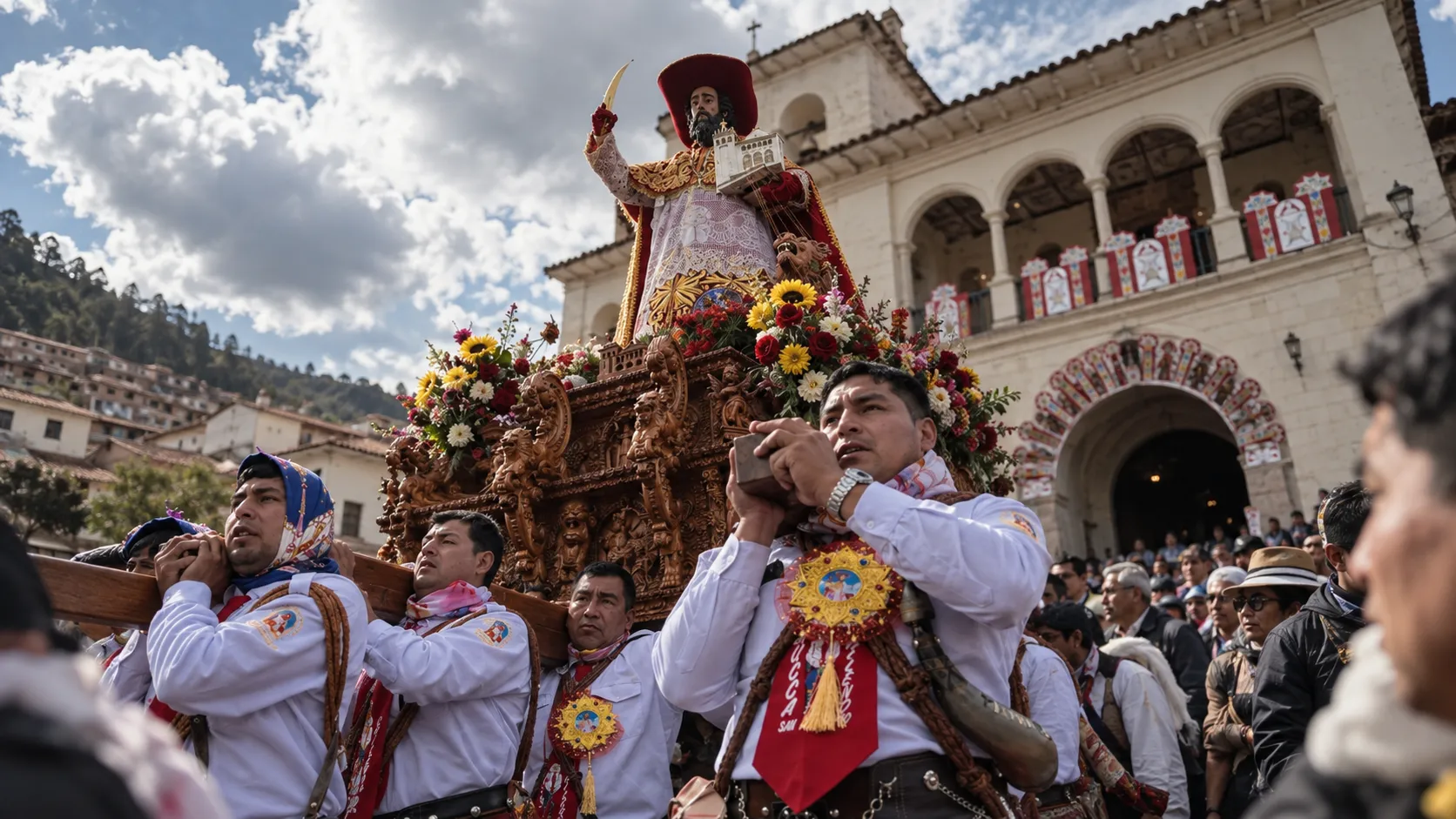
Inca World Traveñ 48 km on foot: How to reach the Señor de Huanca in Cusco

Every September 14, thousands of people walk 48 kilometers from the city of Cusco to the sanctuary of the Señor de Huanca, in the district of San Salvador, province of Calca, at 3,100 m.a.s.l. It is neither a tourist trekking trip nor an organized tour: it is a genuine pilgrimage that sets off at night from San Jerónimo and arrives at dawn on the main day. Here we explain the route, what it physical demands, and why this tradition continues to draw devotees from all over Peru and neighboring countries.

Carla Colon How to Get to Machu Picchu: Complete Guide by Train, Bus, or Hiking

Planning your trip to Peru? Discover the best ways to reach Machu Picchu from Cusco. Compare options by train, bus, budget routes, and legendary trekking trails like the Inca Trail and Salkantay.

Inca World Travel Your ticket to Machu Picchu cannot be lent: What you need to know before the holiday

With the national holiday on August 6 (Battle of Junín) right around the corner, many travelers are organizing last-minute visits to Machu Picchu. Before buying, there is a rule that causes more trouble than it seems: the ticket is personal, unique, and non-transferable. Learn how this rule works at the checkpoint, why you cannot give your ticket away, and how to avoid inconveniences to enjoy your trip to the sanctuary with complete peace of mind.

Are you planning to visit
Machu Picchu in 2026?

We would like to inform our travelers that availability for Circuit 1 and 2 for the months of September, October and November is at 85% of capacity. We recommend booking at least 3 months in advance.

New Circuits and Routes

The Ministry of Culture has consolidated the three main tours. As of 2026, Tour 2 (The Royal Route) remains the only one that allows visitors to take the classic photo from the Guardian’s House. We have adapted all our packages to ensure this access.

Digital Check-In and Biometric Verification

Say goodbye to long check-in lines! Starting this season, entry is faster thanks to the new digital check-in system. Our packages include full management of your personalized tickets to prevent errors on the state platform.

Circuit Ideal for... Clasic photo Difficulty
Circuit 1 (Panoramic) High views and photo posts Yes Low
Circuit 2 (Andean) Complete circuit through the ruins Yes Medium
Circuit 3 (Reality) Persons or reduced movement No Very low

Ask about our Machu Picchu packages

Explore the best of our land

Explore the breathtaking diversity of the Central Andes. From ancient archaeological wonders and surreal high-altitude landscapes to world-class gastronomy and Amazonian adventures, our updated 2026 guides showcase the very best of this premier global destination.