Cuncaicha Cave, an Ice Age Archeological Site in Peru

Andean Ice Age Settlement Discovered at Unbelievable Heights

Cuncaicha Cave, an Ice Age Archeological Site in Peru

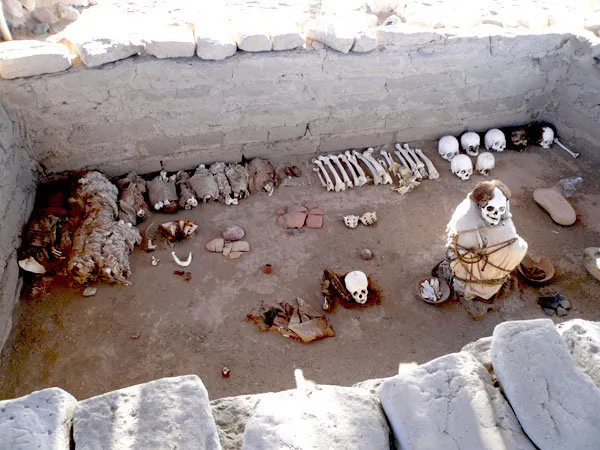
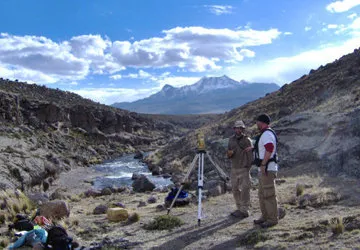
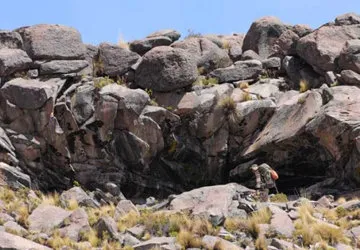
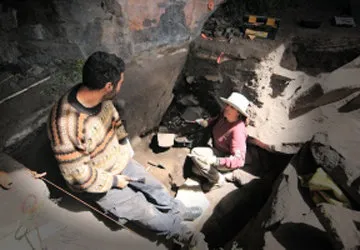
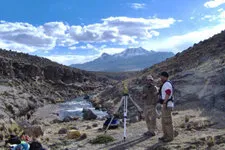
The modern, international archeological team struggled at the high altitude, battling freezing temperatures, strong sun, and thin air- so you can imagine their surprise as the history of an ice age settlement unfolded before them, there, in a cave so high in the Peruvian Andes that they were shocked ancient humans could survive the low oxygen levels...

The modern, international archeological team struggled at the high altitude, battling freezing temperatures, strong sun, and thin air- so you can imagine their surprise as the history of an ice age settlement unfolded before them, there, in a cave so high in the Peruvian Andes that they were shocked ancient humans could survive the low oxygen levels.

The site, which has been named the Cuncaicha cave shelter, dates back 12, 400 years. This means that humans reached the extreme conditions of Cuncaicha some 2,000 years after arriving in South America. At 4,500 meters above sea level (about the height of the Matterhorn), it is the highest ice age human settlement ever found. The only other settlements that have been found at these heights were from a thousand or more years after Cuncaicha.

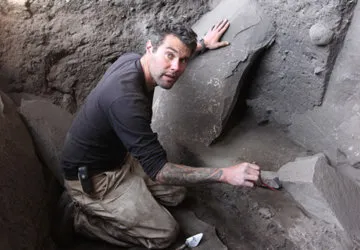
"This was the hardest archeology I've ever done," admitted Sonia Zarrillo, an adjunct assistant professor from the University of Calgary, who coauthored a recent article in the journal Science regarding the excavation. Not only did the researchers soldier through the discomfort, but so did the humans of this ancient settlement. As Ms Zarrillo concluded, "high altitude was not a barrier to human colonization at least by 12,400 years ago."

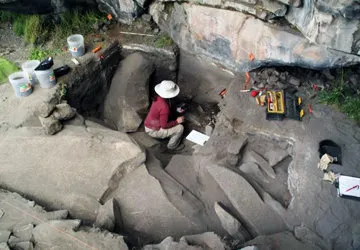
20 to 30 people could fit inside the Cuncaicha cave shelter, and the evidence indicates that it served as a home multiple times over a period spanning thousands of years. They left behind stone tools, bone and shell beads, charcoal, bones from an impressive amount of meat, and cave walls blackened with enough campfire soot to suggest that the cave was inhabited for prolonged periods of time. The tools included scrapers for animal hides and sharpened spear points.

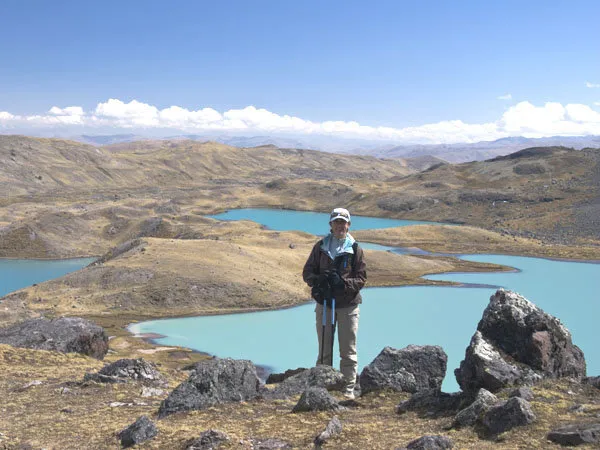
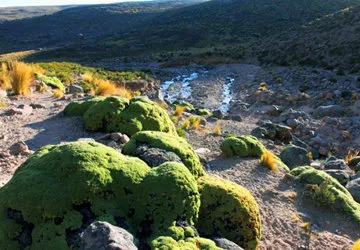
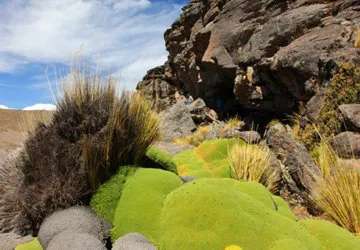
The lead author of the study, Kurt Rademaker of the University of Maine, stumbled upon the cave while searching for a campsite on a research expedition for his PhD thesis a few years ago and instantly recognized it as an archeological site. "I can't say why people first went there," said Rademaker, "but once they did go there, there were plenty of reasons to stay." It might sound odd when referring to the harsh treeless plateau, which resembles a cold lunar landscape, but he was referring to plentiful deer and the wild ancestors of llamas and alpacas which used to roam the nearby Pucuncho Basin, as well as the obsidian deposits for fashioning stone tools, and the resinous plants for starting warming fires.

Humans are eminently adaptable, as evidenced not only by Cuncaicha cave but also by the genetic adaptations found in the local Andean herders who now use the area to graze llamas and alpacas. It probably took around a thousand years for locals to evolve the  unusually large lung capacities, high metabolic rates, and ability to carry more oxygen in their blood that makes living at high altitude more comfortable.
The modern, international archeological team struggled at the high altitude, battling freezing temperatures, strong sun, and thin air- so you can imagine their surprise as the history of an ice age settlement unfolded before them, there, in a cave so high in the Peruvian Andes that they were shocked ancient humans could survive the low oxygen levels...

The modern, international archeological team struggled at the high altitude, battling freezing temperatures, strong sun, and thin air- so you can imagine their surprise as the history of an ice age settlement unfolded before them, there, in a cave so high in the Peruvian Andes that they were shocked ancient humans could survive the low oxygen levels.

The site, which has been named the Cuncaicha cave shelter, dates back 12, 400 years. This means that humans reached the extreme conditions of Cuncaicha some 2,000 years after arriving in South America. At 4,500 meters above sea level (about the height of the Matterhorn), it is the highest ice age human settlement ever found. The only other settlements that have been found at these heights were from a thousand or more years after Cuncaicha.

"This was the hardest archeology I've ever done," admitted Sonia Zarrillo, an adjunct assistant professor from the University of Calgary, who coauthored a recent article in the journal Science regarding the excavation. Not only did the researchers soldier through the discomfort, but so did the humans of this ancient settlement. As Ms Zarrillo concluded, "high altitude was not a barrier to human colonization at least by 12,400 years ago."

20 to 30 people could fit inside the Cuncaicha cave shelter, and the evidence indicates that it served as a home multiple times over a period spanning thousands of years. They left behind stone tools, bone and shell beads, charcoal, bones from an impressive amount of meat, and cave walls blackened with enough campfire soot to suggest that the cave was inhabited for prolonged periods of time. The tools included scrapers for animal hides and sharpened spear points.

The lead author of the study, Kurt Rademaker of the University of Maine, stumbled upon the cave while searching for a campsite on a research expedition for his PhD thesis a few years ago and instantly recognized it as an archeological site. "I can't say why people first went there," said Rademaker, "but once they did go there, there were plenty of reasons to stay." It might sound odd when referring to the harsh treeless plateau, which resembles a cold lunar landscape, but he was referring to plentiful deer and the wild ancestors of llamas and alpacas which used to roam the nearby Pucuncho Basin, as well as the obsidian deposits for fashioning stone tools, and the resinous plants for starting warming fires.

Humans are eminently adaptable, as evidenced not only by Cuncaicha cave but also by the genetic adaptations found in the local Andean herders who now use the area to graze llamas and alpacas. It probably took around a thousand years for locals to evolve the  unusually large lung capacities, high metabolic rates, and ability to carry more oxygen in their blood that makes living at high altitude more comfortable.
News, routes, and expert tips

Explore the latest from our Cusco travel blog. Get practical guides, Machu Picchu updates, and fresh trekking and culture recommendations. Everything you need to travel Cusco safely and stylishly in 2026. Your next Andean story starts here!

Inca World Travel Seven Natural Wonders Hidden By Peru Discover Now

Ready to explore beyond Machu Picchu? Discover the 7 natural wonders of Peru, a country brimming with hidden ecological treasures. From deep turquoise lagoons and the famous rainbow mountain of colors to surreal stone forests and vast rivers, these stunning destinations are waiting for you. Get ready to dive into the raw, untouched beauty of South America!

Inca World Historic Center of Cusco Tours: The Ideal Cultural Walking Itinerary

Cusco is a city meant to be explored on foot. Every street holds a story, and as you walk, you feel as though you aren't just "visiting" a city, but rather walking through layers of a living past: the Inca world and the Spanish Baroque, seamlessly blended in stone.That is why, if it is your first time in Cusco, the historic center is one of the best ways to kick off your trip. Additionally, sitting at around 3,400 meters 11,150 feet above sea level, a relaxed stroll helps you acclimate to the altitude, making you feel much better before taking on longer or more demanding excursions.

Inca World Travel How to Travel from Pisco to Cusco: Flights, Routes, and Travel Tips

Are you planning your trip to Peru and want to combine the magic of the Ica Desert with the majesty of the Andes? Connecting the southern coast with the heart of the world is one of the best decisions you can make.

Here, we’ll tell you everything you need to know about the route from Pisco to Cusco, flight options, and how to plan your itinerary so you don’t miss a thing.

Are you planning to visit
Machu Picchu in 2026?

We would like to inform our travelers that availability for Circuit 1 and 2 for the months of September, October and November is at 85% of capacity. We recommend booking at least 3 months in advance.

New Circuits and Routes

The Ministry of Culture has consolidated the three main tours. As of 2026, Tour 2 (The Royal Route) remains the only one that allows visitors to take the classic photo from the Guardian’s House. We have adapted all our packages to ensure this access.

Digital Check-In and Biometric Verification

Say goodbye to long check-in lines! Starting this season, entry is faster thanks to the new digital check-in system. Our packages include full management of your personalized tickets to prevent errors on the state platform.

Circuit Ideal for... Clasic photo Difficulty
Circuit 1 (Panoramic) High views and photo posts Yes Low
Circuit 2 (Andean) Complete circuit through the ruins Yes Medium
Circuit 3 (Reality) Persons or reduced movement No Very low

Ask about our Machu Picchu packages

Explore the best of our land

Explore the breathtaking diversity of the Central Andes. From ancient archaeological wonders and surreal high-altitude landscapes to world-class gastronomy and Amazonian adventures, our updated 2026 guides showcase the very best of this premier global destination.