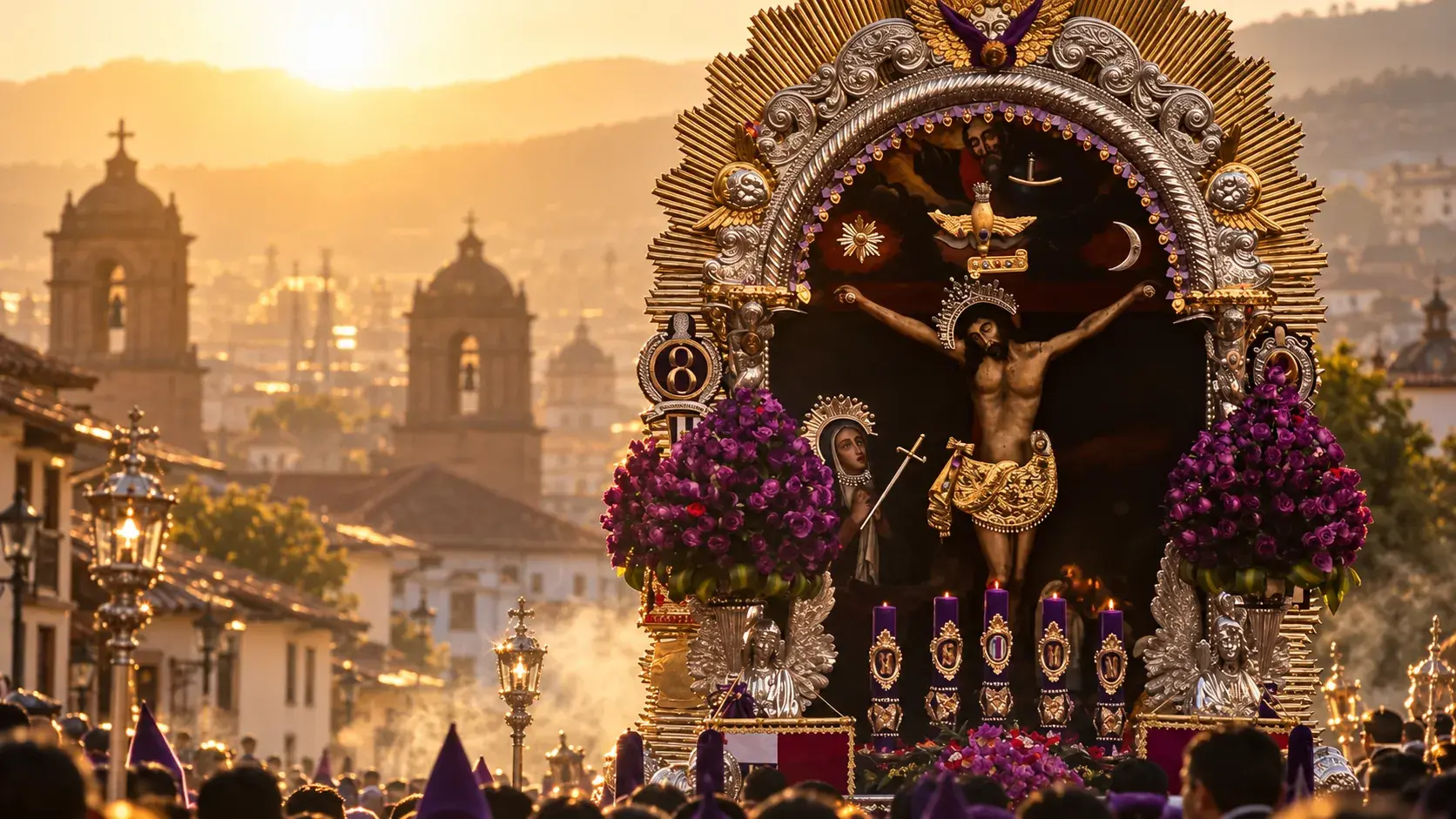
Lima's greatest devotion also walks through Cusco, departing from San Francisco Square. Every October, the so-called purple month transforms public space into a collective manifestation of faith and viceregal tradition. Although the original mural painting rests in the Lima convent of Las Nazarenas, the Cusco replica demonstrates how this cult took root in the Andes. For the traveler and cultural observer, witnessing the litters on the move requires knowing the official dates, urban logistics, and local dynamics of two cities with very different altitudes and geographies.
The Cusco Replica: The Protector and Pilgrim of Cusco
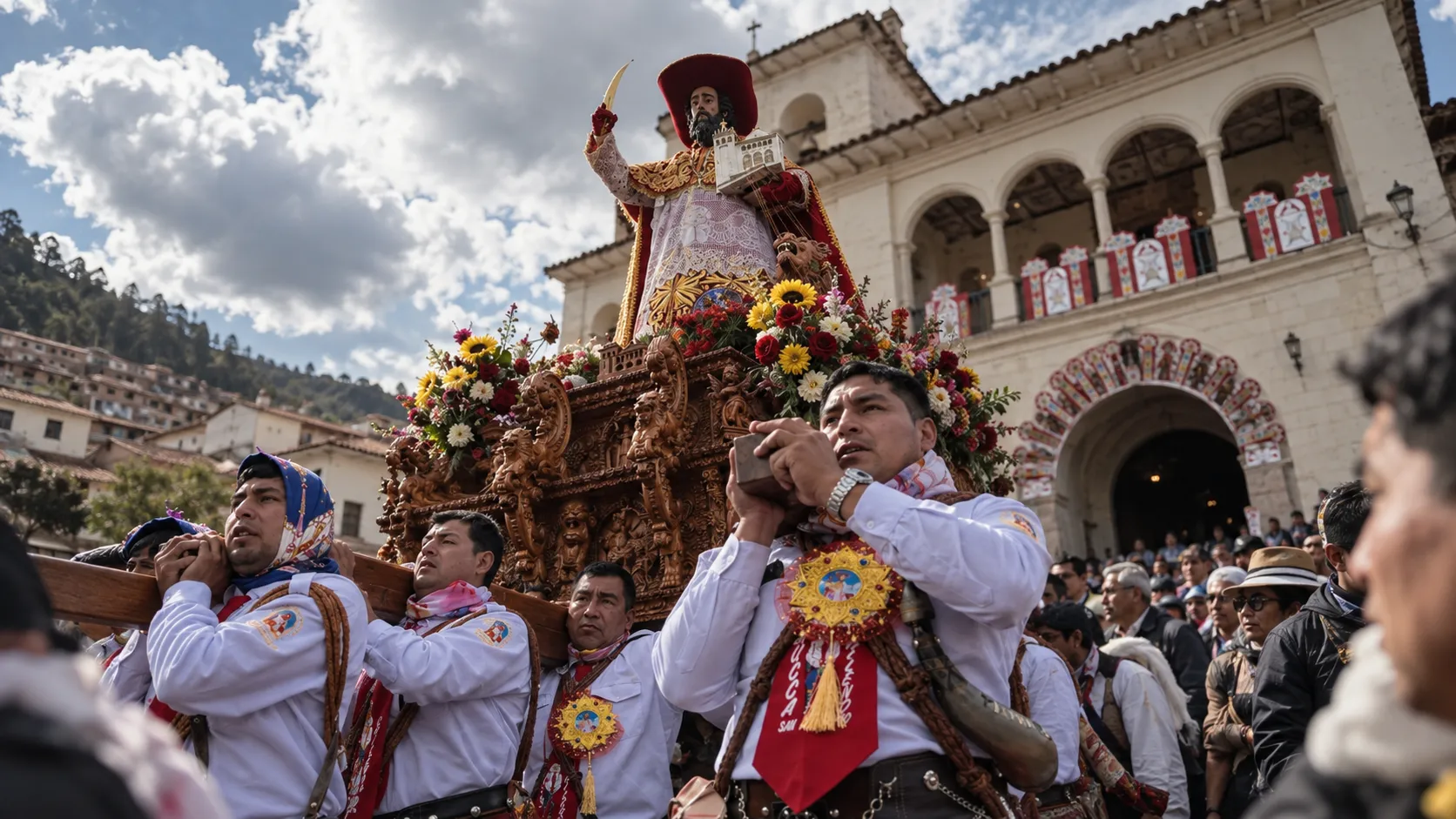
In the imperial city, popular veneration is not directed to the coastal mural, but to a sculpted replica called the Protector and Pilgrim of Cusco. This effigy rests year-round in the Temple of San Francisco de Asís, located in San Francisco Square. Unlike the processions in Lima at sea level, accompanying the litters at 3,400 meters of altitude requires walking slowly and wearing appropriate clothing for weather changes between sunny middays and cold Andean nights.
The Cusco cortege travels through narrow streets of pre-Hispanic and viceregal layout, passing in front of conventual temples of high heritage value such as Santa Clara and Santa Catalina. Regarding dates, the processions in Cusco take place on the weekends of the second half of October; confirm the schedule at the Temple of San Francisco before heading out. Andean routes of faith entail physical effort over cobblestone roads, recalling how clothing for another pilgrimage, that of the Lord of Huanca requires textile preparation for the dust along the journey.
Official 2026 Processions in Lima: Pending Dates
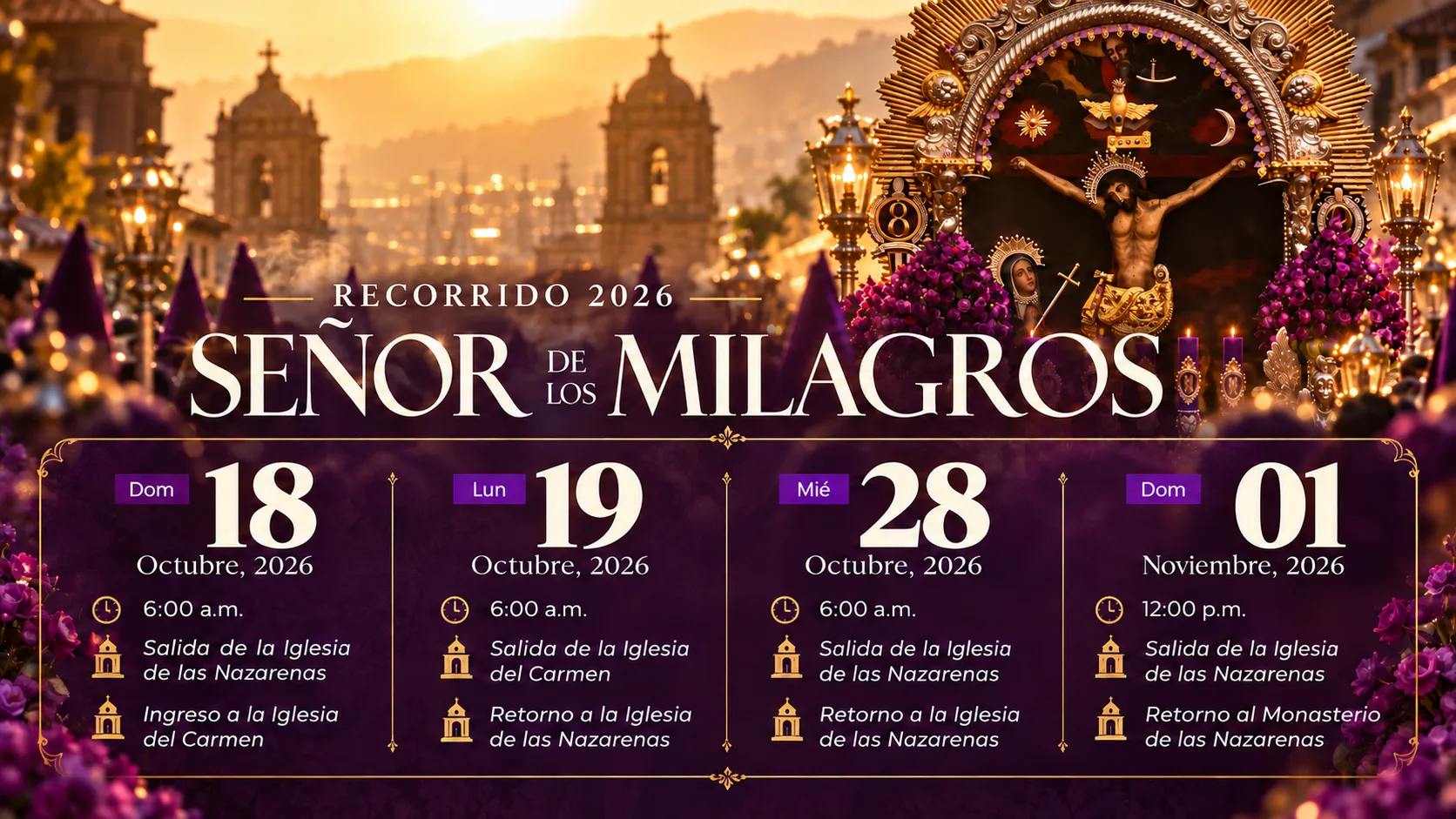
In Lima, central events take place starting from the Sanctuary of Las Nazarenas. The official 2026 program includes five solemn processions. Since the initial route on Saturday, October 3 has already concluded at noon, visitors must coordinate their itineraries to accompany the four remaining outings that mark the climax of the festival:
- Sunday, October 18: The litters depart from Nazarenas, cross the Main Square, and stay overnight at the church of Carmen de Lima in Barrios Altos.
- Monday, October 19: The procession begins its return to Nazarenas, visiting hospitals and downtown temples.
- Wednesday, October 28: Commemorative outing that performs its traditional tribute at the Arzobispo Loayza Hospital.
- Sunday, November 1: Fifth and final annual procession, saying farewell to the image until the next liturgical period.
The influx of faithful alters transportation in Downtown Lima. The National Police of Peru (PNP) monitors access points, and the Urban Transportation Authority (ATU) asks visitors to check their announcements to avoid delays on the Metropolitano bus system. If you have limited time in the capital, you can take advantage of a compact tour like Lima in 2 Hours: Miraflores and Barranco.
Guidelines of Respect for the Cultural Observer
Attending a massive procession in Lima or Cusco is a high-value cultural experience that demands consideration toward brotherhoods, incense burners (sahumadoras), and families. The impact of the purple sea moves visitors, but harmonious coexistence depends on respecting the solemn progress of the cortege.
If you attend as a spectator, follow these practical rules:
- Attire: Wearing a purple habit is voluntary; wear comfortable clothing, closed shoes, and warm layers for the evening.
- Passage of the Litters: Do not block the movement of the bearer groups (cuadrillas) or cross safety ropes.
- Photography: Avoid using flash near the canvas to preserve the oil painting's conservation.
- Traffic and Belongings: Be patient with pedestrian detours and keep an eye on your valuables.
The historical value of these traditions receives public support. The State recognized the processional archive in the article regarding the Ministry of Culture and documents of the Bearers' Squads. Likewise, official state recognition appears in the registry of National Cultural Heritage declarations. At the municipal level, the article from the Municipality of Miraflores awarding the Lord of Miracles stands out, while international tourism promotion is highlighted via the Lord of Miracles on the official Peruvian tourism portal.
Gastronomy and Devotional Traditions Across the Country
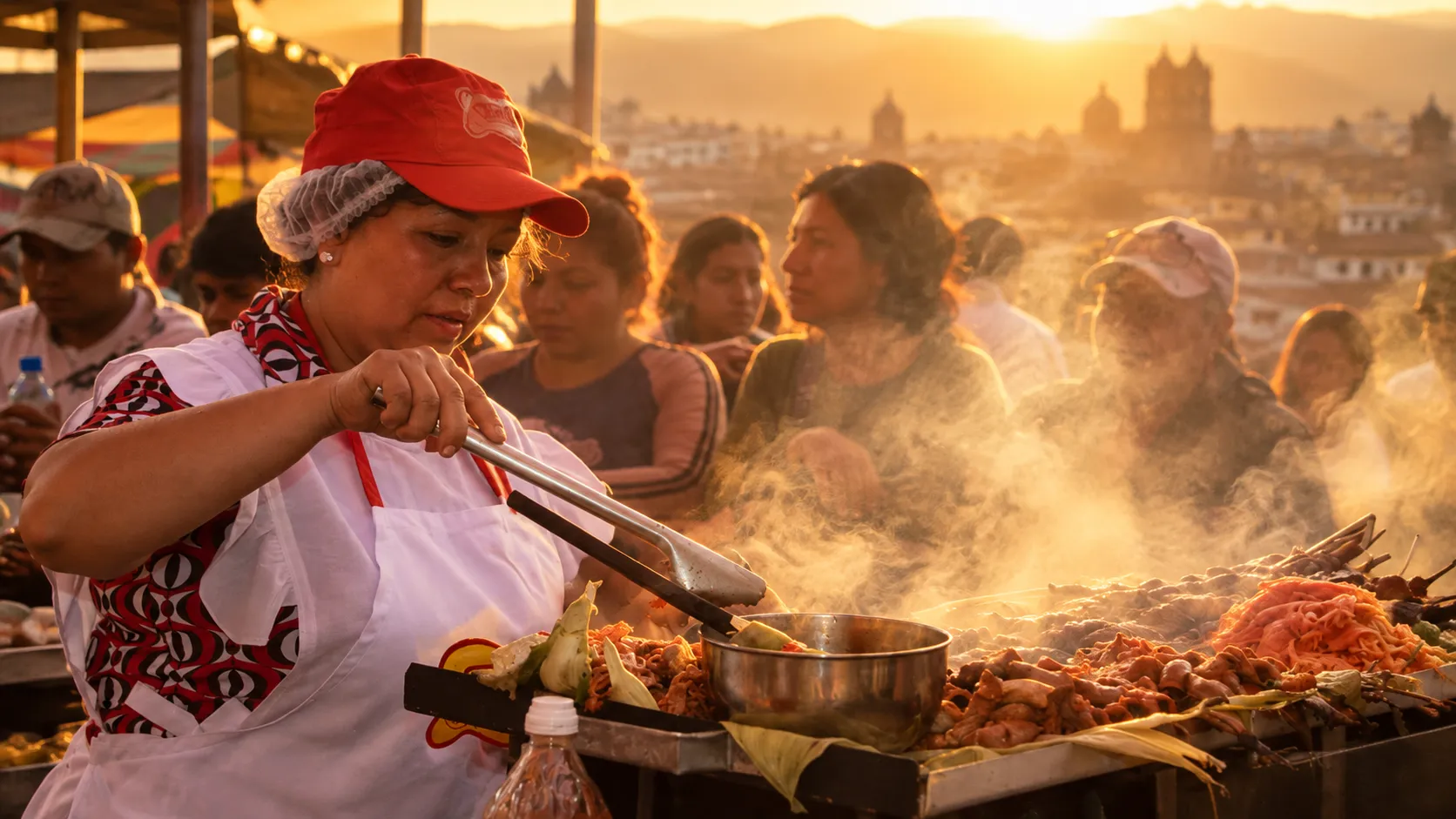
The festival is also experienced through local food. In Lima and Cusco, the bearer squads pause next to traditional stalls offering the iconic sweet of the month, turrón de Doña Pepa, topped with fruit syrup and sprinkles, along with classic beef heart anticuchos sizzling over charcoal grills. This culinary culture connects with Peruvian wine and spirit varieties; if you are interested in discovering the traditional drinks of the coastal valleys, you can explore the Pisco Route Tour.
Religious manifestations in Peru share notable similarities in their collective fervor. If you are drawn to sacred art and community rituals of the central highlands, an essential reference point is Holy Week in Ayacucho. For those seeking to appreciate colonial architecture at other times of the year, a recommended alternative is discovering the Spirit of Ayacucho and its historic mansions.
Plan Your Religious Tourism Experience with Inca World
Witnessing the purple month in Lima and Cusco offers direct access to the living history of viceregal Peru. At Inca World, we design specialized itineraries for travelers interested in faith, anthropology, and monumental heritage. For pilgrims wishing to visit the country's main Catholic sanctuaries in a single articulated route between the coast and the Andes, we offer the Peru with the Pope Travel Experience.
We feature certified guides and vehicular logistics adapted to festival restrictions, ensuring a memorable and safe experience in each city.
Book your historical experience: Viceregal City Tour in Lima