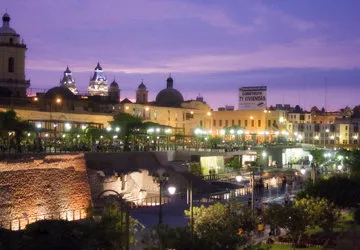
View of Parque de la Muralla in Lima's city center

New Developments to Allow Travelers to Explore Lima by Foot & Cable Car

View of Parque de la Muralla in Lima's city center
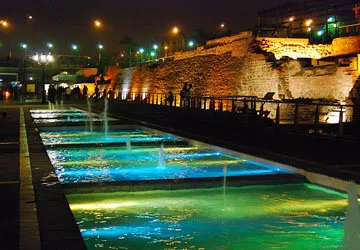
Lima's Parque de la Muralla at night
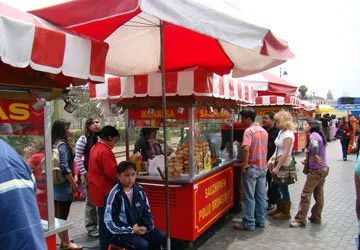
Venders selling treats at Parque de la Muralla

The Ministry of Culture has approved a plan for a cable car project this September to unite Parque de la Muralla in the city's historical center with San Cristobal Hill. The cable car system is expected to be a boon to the area, moving up to 700 people at one time, at a fare of S/3.50 (soles). In both areas, footpaths have been replacing roads, and the cable car project will build on this.

The Ministry of Culture has approved a plan for a cable car project this September to unite Parque de la Muralla in the city's historical center with San Cristobal Hill.

Parque de la Muralla is located in the historic colonial center of Lima, which is a UNESCO World Heritage Site including the Plaza de Armas and its Cathedral, the Archbishop's and Municipal Palaces, Paseo de la República, Plaza San Martín, and the Convent of San Francisco with its famous catacombs.  During the 17th century, this historic center was shielded by a city wall (muralla) which was torn down in the 19th century to accommodate expansion, One can view the wall's remains, and other artifacts from the history and development of Lima, at Parque de la Muralla and its onsite museum.

Many tourists already visit San Cristobal hill (located 4,000 m above sea level, between the Rímac and San Juan de Lurigancho districts) to enjoy its views overlooking the city of Lima. On a clear day, one can see as far as the Chorillos and La Punta beaches and the island of San Lorenzo. A museum was opened on the site in 1997, which offers an exhibition on the history of the hill and its cross, and photographs of historic Lima. To reach the top of San Cristobal, one currently has to walk or take one of the small buses known as urbanitos, so the cable car system is expected to be a boon to the area. It will be able to move up to 700 people at one time, at a fare of S/3.50 (soles).

According to Domingo Arzubialde, the Director of the Lima Municipality's Promotion of Private Investment, "The construction of the cable cars is a part of the policy of tourism development in the historical center and is related to the Cantagallo park and the foot paths that replaced roads within the Cercado and Rímac."

Local authorities are currently only waiting on the final engineering plans to commence work on the project, whose budget is expected to reach 8 million soles of mostly private funding and which should be operable by May or June of 2014. Cable cars might feasibly be adopted in other areas of Lima as well, as social assistance projects serving the many poor districts in the hills surrounding the city.
The Ministry of Culture has approved a plan for a cable car project this September to unite Parque de la Muralla in the city's historical center with San Cristobal Hill. The cable car system is expected to be a boon to the area, moving up to 700 people at one time, at a fare of S/3.50 (soles). In both areas, footpaths have been replacing roads, and the cable car project will build on this.

The Ministry of Culture has approved a plan for a cable car project this September to unite Parque de la Muralla in the city's historical center with San Cristobal Hill.

Parque de la Muralla is located in the historic colonial center of Lima, which is a UNESCO World Heritage Site including the Plaza de Armas and its Cathedral, the Archbishop's and Municipal Palaces, Paseo de la República, Plaza San Martín, and the Convent of San Francisco with its famous catacombs.  During the 17th century, this historic center was shielded by a city wall (muralla) which was torn down in the 19th century to accommodate expansion, One can view the wall's remains, and other artifacts from the history and development of Lima, at Parque de la Muralla and its onsite museum.

Many tourists already visit San Cristobal hill (located 4,000 m above sea level, between the Rímac and San Juan de Lurigancho districts) to enjoy its views overlooking the city of Lima. On a clear day, one can see as far as the Chorillos and La Punta beaches and the island of San Lorenzo. A museum was opened on the site in 1997, which offers an exhibition on the history of the hill and its cross, and photographs of historic Lima. To reach the top of San Cristobal, one currently has to walk or take one of the small buses known as urbanitos, so the cable car system is expected to be a boon to the area. It will be able to move up to 700 people at one time, at a fare of S/3.50 (soles).

According to Domingo Arzubialde, the Director of the Lima Municipality's Promotion of Private Investment, "The construction of the cable cars is a part of the policy of tourism development in the historical center and is related to the Cantagallo park and the foot paths that replaced roads within the Cercado and Rímac."

Local authorities are currently only waiting on the final engineering plans to commence work on the project, whose budget is expected to reach 8 million soles of mostly private funding and which should be operable by May or June of 2014. Cable cars might feasibly be adopted in other areas of Lima as well, as social assistance projects serving the many poor districts in the hills surrounding the city.
News, routes, and expert tips

Explore the latest from our Cusco travel blog. Get practical guides, Machu Picchu updates, and fresh trekking and culture recommendations. Everything you need to travel Cusco safely and stylishly in 2026. Your next Andean story starts here!

Inca World Traveñ 48 km on foot: How to reach the Señor de Huanca in Cusco

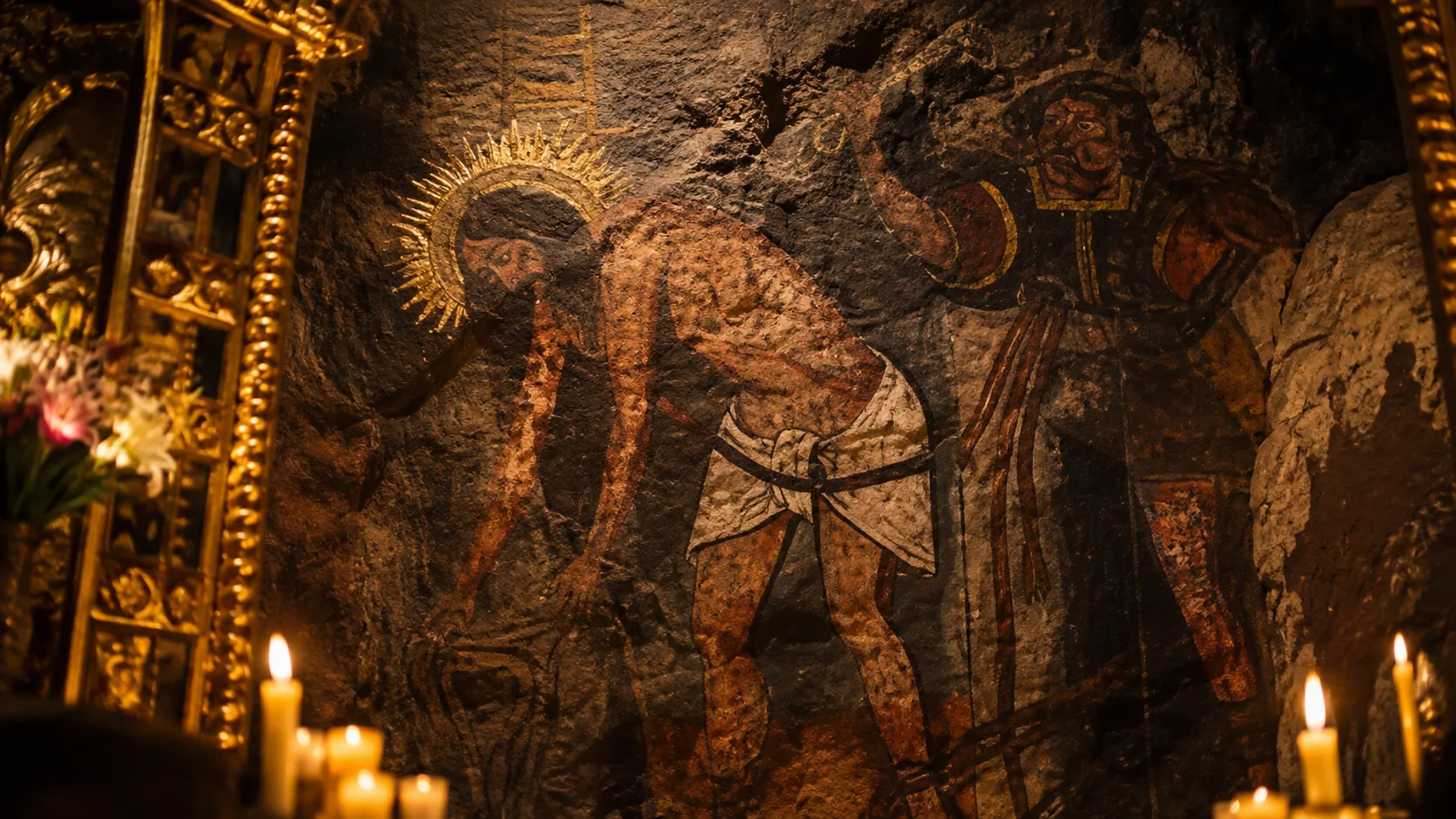
Every September 14, thousands of people walk 48 kilometers from the city of Cusco to the sanctuary of the Señor de Huanca, in the district of San Salvador, province of Calca, at 3,100 m.a.s.l. It is neither a tourist trekking trip nor an organized tour: it is a genuine pilgrimage that sets off at night from San Jerónimo and arrives at dawn on the main day. Here we explain the route, what it physical demands, and why this tradition continues to draw devotees from all over Peru and neighboring countries.

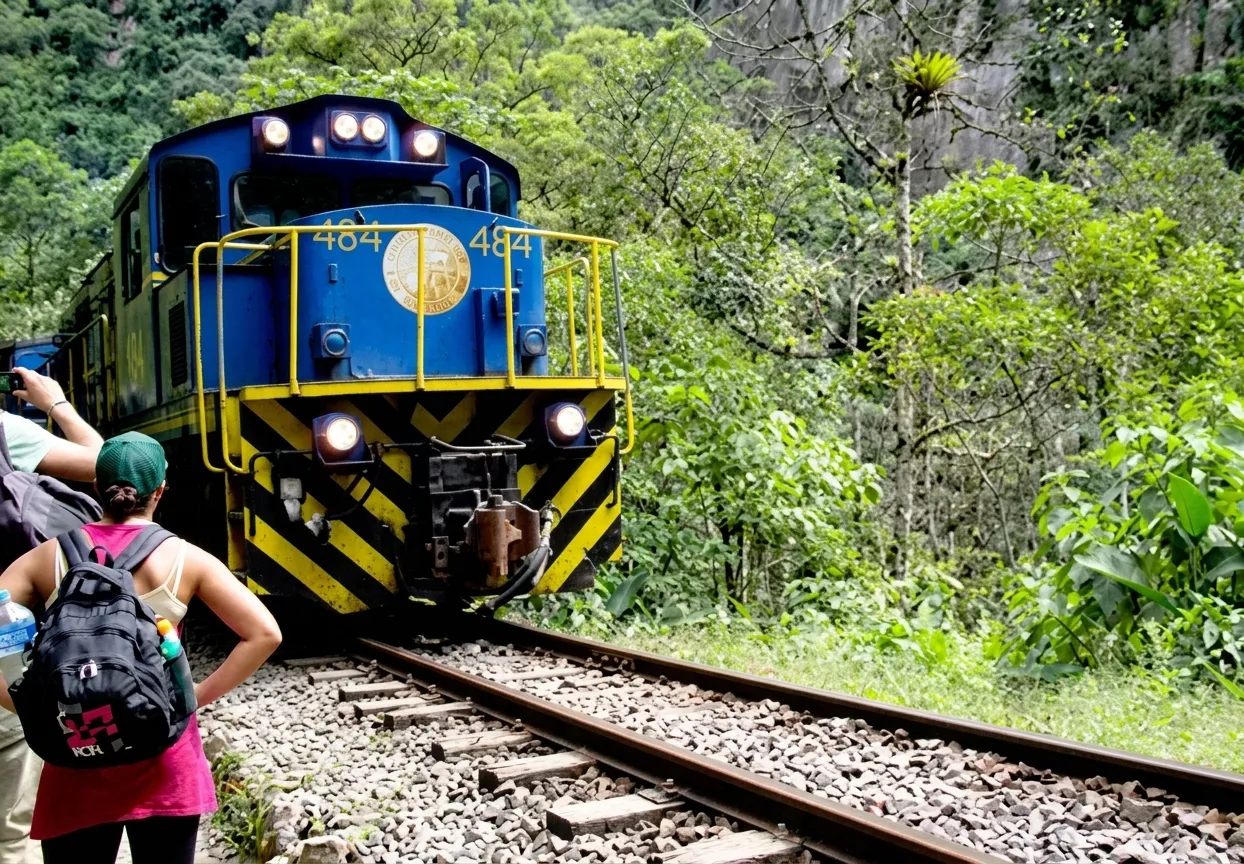
Carla Colon How to Get to Machu Picchu: Complete Guide by Train, Bus, or Hiking

Planning your trip to Peru? Discover the best ways to reach Machu Picchu from Cusco. Compare options by train, bus, budget routes, and legendary trekking trails like the Inca Trail and Salkantay.

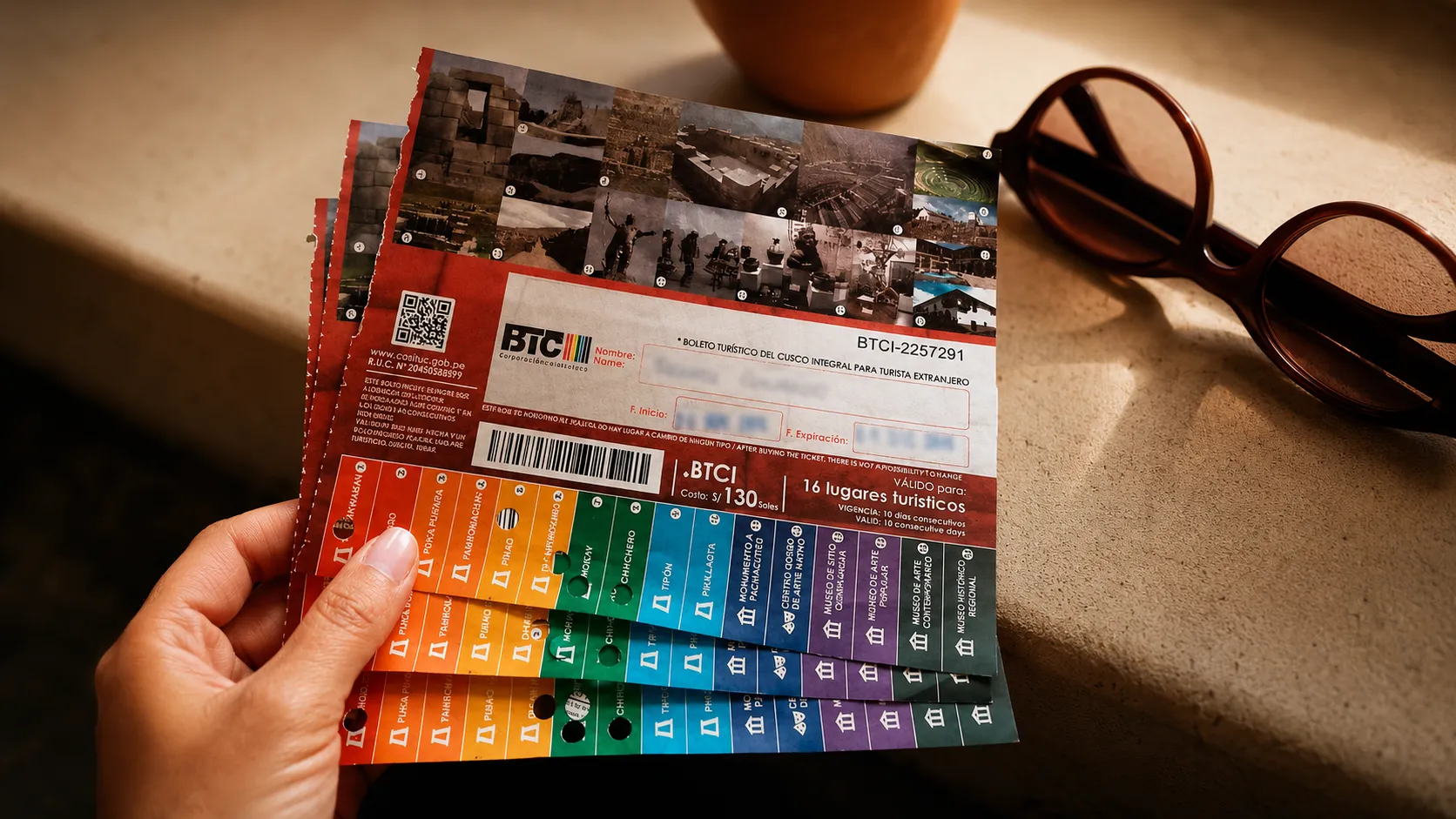
Inca World Travel Your ticket to Machu Picchu cannot be lent: What you need to know before the holiday

With the national holiday on August 6 (Battle of Junín) right around the corner, many travelers are organizing last-minute visits to Machu Picchu. Before buying, there is a rule that causes more trouble than it seems: the ticket is personal, unique, and non-transferable. Learn how this rule works at the checkpoint, why you cannot give your ticket away, and how to avoid inconveniences to enjoy your trip to the sanctuary with complete peace of mind.

Are you planning to visit
Machu Picchu in 2026?

We would like to inform our travelers that availability for Circuit 1 and 2 for the months of September, October and November is at 85% of capacity. We recommend booking at least 3 months in advance.

New Circuits and Routes

The Ministry of Culture has consolidated the three main tours. As of 2026, Tour 2 (The Royal Route) remains the only one that allows visitors to take the classic photo from the Guardian’s House. We have adapted all our packages to ensure this access.

Digital Check-In and Biometric Verification

Say goodbye to long check-in lines! Starting this season, entry is faster thanks to the new digital check-in system. Our packages include full management of your personalized tickets to prevent errors on the state platform.

Circuit Ideal for... Clasic photo Difficulty
Circuit 1 (Panoramic) High views and photo posts Yes Low
Circuit 2 (Andean) Complete circuit through the ruins Yes Medium
Circuit 3 (Reality) Persons or reduced movement No Very low

Ask about our Machu Picchu packages

Explore the best of our land

Explore the breathtaking diversity of the Central Andes. From ancient archaeological wonders and surreal high-altitude landscapes to world-class gastronomy and Amazonian adventures, our updated 2026 guides showcase the very best of this premier global destination.