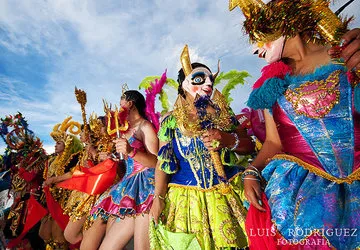
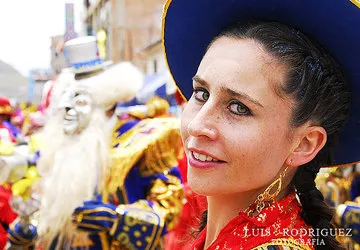
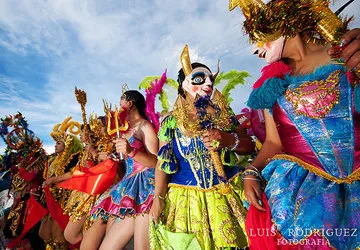
Each February, the little city of Puno alongside Lake Titicaca throw's one of South America's most spectacular festivals in honor of its patron saint Mamacha Carmen, the Virgen de Candelaria Festival. The "Folkloric Capital of Peru", as it has long been known, puts on a vibrant show involving more than 45,000 dancers and musicians and tens of thousands of indirect participants including sponsors, embroiderers, and artisan boot and mask makers. It is by far Puno's most important event of the year, and many a traveler planning to tour Lake Titicaca has scheduled their travel itinerary around it. Celebrations during the two weeks long festivities include the Great Parade of Indigenous Dances, the Sikuri Panpipers' Orchestra Parade, food fairs, open-air concerts, fireworks, and general revelry.
Puno's Regional Directorate of Culture has announced that it is currently putting the finishing touches on its UNESCO application for the "Masterpiece of the Oral and Intangible Heritage of Humanity" status for the Virgen de la Candelaria Festival. The application will be presented this coming January, and will include a short video and ten photos. The Virgen de Candelaria Festival was already honored at the national level in 2003 when it was official awarded National Cultural Heritage status by Peru's National Institute of Culture.
Puno owes its reputation as the Peruvian Folkloric Capital to its wealth of dances; it boasts almost 300 classified dances with their own music and dress, each with its own historical and cultural significance. Communities in the city proper and throughout the surrounding provincial regions begin preparing many months in advance and invest heavily in the ornate costumes dictated by each dance. There are pre-Columbian dances such as the Aymara Cahuiris, in honor of the god of thunder, and the Inca Huallatha. Other dances arose during colonial times, such as the Afro-Peruvian Phusa Morenos or Siku Morenos with their vibrant devil and angel costumes; these developed into two of the most famous dances of Candelaria, the Morenada and Diablada. The dress of traditional Andean women during the post-colonial dances Republican era can still be seen throughout the highlands today, and is showcased in dances from this time, such as the Pandilla Puneña. (The look is typified by braids, bowler hats, skirts with abundant petticoats, Spanish shawls, and mid-calf boots.)