






Birdwatching while hiking to Machu Picchu Ruins

Record "Big Days": Peru, a Birdwatcher's Paradise

Birdwatching while hiking to Machu Picchu Ruins
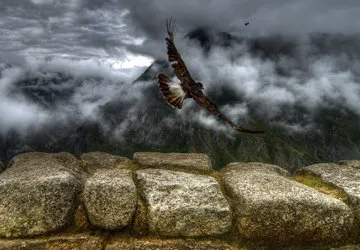
Caracara flying over the Inca ruins of Machu Picchu
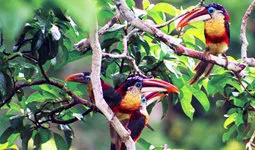
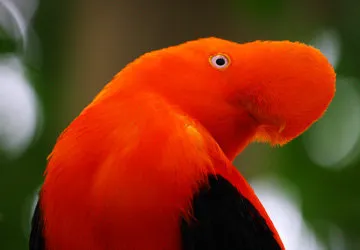
Andean Cock-of-the-Rocks in the Peruvian cloud-forest

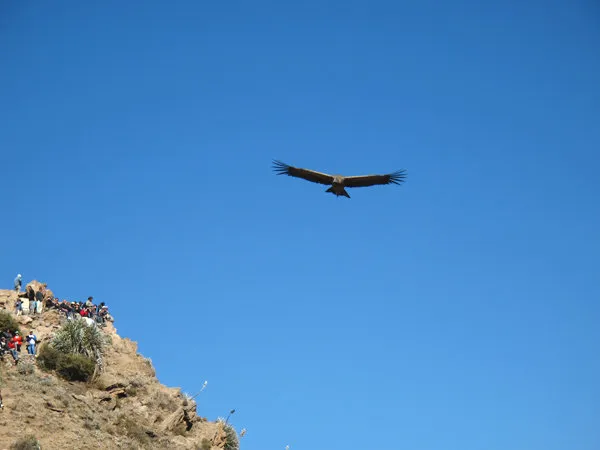
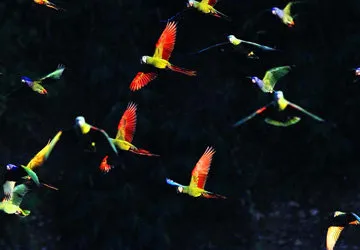
From jungle's cacophonic parrots and macaws, to the giant Andean Condor in Arequipa's Canyons and the Andean Cock-of-the-Rock near Machu Picchu, Peru has a lot to offer modern birders. It boasts more than 1800 registered species- close to 20% of the world's total, and more than found in all of North America and Europe combined!

Famed American field onithologist Theodore Parker III once said, "Peru offers bird enthusiasts more than any other country in the world… Being here is like being a child visiting a huge store filled with new and fascinating toys". He wasn't exaggerating: the South American country boasts more than 1800 registered species- close to 20% of the world's total, and more than found in all of North America and Europe combined. Of these, more than 300 are endemic. From the cacophonic parrots and macaws in the jungle's clay licks, to the giant endangered Andean Condor in Colca and Cotahuasi Canyons (the deepest in the world), to the Andean Cock-of-the-Rock near Machu Picchu with its distinctive mating dance, Peru has a lot to offer modern birders.

Peru holds the record for the most species in a single place (650 in the area surrounding the Explorer's Inn lodge in the jungle of Tambopata) and the record for the highest number of species seen in a single day (361 in the area surrounding the Biological Station of Cocha Cashu, in Manu National Reserve). The current worldwide "Big Day" record was established in Peru in 1982, by a team of birders in Manu National Park, who recorded 331 species while only walking and paddling canoes.

In their ongoing effort to promote the country, PromPerú (the Commission for the Promotion of Peru for Exportation and Tourism) has arranged Arequipa's first "Big Day", as one-day bird watching contests are known worldwide. In a period of 19 hours, birding teams covered more than 600km as they explored the National Reserve of Salinas and Aguada Blanca and the Mejía Lagoons National Sanctuary. The "Los Huarequeques" team won the competition with 121 species sighted, equivalent to 8% of the birds which exist in Perú. The runner-up was the "Peregrinos", with 115 birds sighted. Both of the top two teams received prizes and were originally chosen in a national campaign, launched this past March vía Facebook Visit Perú, with 2,639 people participating.

Despite Peru's legendary reputation as a biodiverse paradise, the birding sector of the economy- known in Perú as aviturismo is only just beginning to gain ground. According to Prom-Peru, three million birders travel internationally each year, but Peru is only currently attracting 15,000 of them annually, despite its vast potential. That's a pity, as such travelers spend at least a week in the chosen country, and spend 1.5 times more than a traditional tourist. This means that such tourists could be a great help to the country's social development and environmental conversation goals.

The sea, desert coast, high Andean plains and mountains, cloud-forests and jungle provide unique and fragile habitats for birds which you won't see anywhere else. Six new bird species were discovered last year, including the Junín Tapaculo, which boasts a unique song of rapidly repeated series of ascending phrases and is found in the cloud-forests of the eastern Andean slopes. In the last 30 years, 42 birds species have been discovered.


From jungle's cacophonic parrots and macaws, to the giant Andean Condor in Arequipa's Canyons and the Andean Cock-of-the-Rock near Machu Picchu, Peru has a lot to offer modern birders. It boasts more than 1800 registered species- close to 20% of the world's total, and more than found in all of North America and Europe combined!

Famed American field onithologist Theodore Parker III once said, "Peru offers bird enthusiasts more than any other country in the world… Being here is like being a child visiting a huge store filled with new and fascinating toys". He wasn't exaggerating: the South American country boasts more than 1800 registered species- close to 20% of the world's total, and more than found in all of North America and Europe combined. Of these, more than 300 are endemic. From the cacophonic parrots and macaws in the jungle's clay licks, to the giant endangered Andean Condor in Colca and Cotahuasi Canyons (the deepest in the world), to the Andean Cock-of-the-Rock near Machu Picchu with its distinctive mating dance, Peru has a lot to offer modern birders.

Peru holds the record for the most species in a single place (650 in the area surrounding the Explorer's Inn lodge in the jungle of Tambopata) and the record for the highest number of species seen in a single day (361 in the area surrounding the Biological Station of Cocha Cashu, in Manu National Reserve). The current worldwide "Big Day" record was established in Peru in 1982, by a team of birders in Manu National Park, who recorded 331 species while only walking and paddling canoes.

In their ongoing effort to promote the country, PromPerú (the Commission for the Promotion of Peru for Exportation and Tourism) has arranged Arequipa's first "Big Day", as one-day bird watching contests are known worldwide. In a period of 19 hours, birding teams covered more than 600km as they explored the National Reserve of Salinas and Aguada Blanca and the Mejía Lagoons National Sanctuary. The "Los Huarequeques" team won the competition with 121 species sighted, equivalent to 8% of the birds which exist in Perú. The runner-up was the "Peregrinos", with 115 birds sighted. Both of the top two teams received prizes and were originally chosen in a national campaign, launched this past March vía Facebook Visit Perú, with 2,639 people participating.

Despite Peru's legendary reputation as a biodiverse paradise, the birding sector of the economy- known in Perú as aviturismo is only just beginning to gain ground. According to Prom-Peru, three million birders travel internationally each year, but Peru is only currently attracting 15,000 of them annually, despite its vast potential. That's a pity, as such travelers spend at least a week in the chosen country, and spend 1.5 times more than a traditional tourist. This means that such tourists could be a great help to the country's social development and environmental conversation goals.

The sea, desert coast, high Andean plains and mountains, cloud-forests and jungle provide unique and fragile habitats for birds which you won't see anywhere else. Six new bird species were discovered last year, including the Junín Tapaculo, which boasts a unique song of rapidly repeated series of ascending phrases and is found in the cloud-forests of the eastern Andean slopes. In the last 30 years, 42 birds species have been discovered.

News, routes, and expert tips

Explore the latest from our Cusco travel blog. Get practical guides, Machu Picchu updates, and fresh trekking and culture recommendations. Everything you need to travel Cusco safely and stylishly in 2026. Your next Andean story starts here!

Inca World Traveñ 48 km on foot: How to reach the Señor de Huanca in Cusco

Every September 14, thousands of people walk 48 kilometers from the city of Cusco to the sanctuary of the Señor de Huanca, in the district of San Salvador, province of Calca, at 3,100 m.a.s.l. It is neither a tourist trekking trip nor an organized tour: it is a genuine pilgrimage that sets off at night from San Jerónimo and arrives at dawn on the main day. Here we explain the route, what it physical demands, and why this tradition continues to draw devotees from all over Peru and neighboring countries.

Carla Colon How to Get to Machu Picchu: Complete Guide by Train, Bus, or Hiking

Planning your trip to Peru? Discover the best ways to reach Machu Picchu from Cusco. Compare options by train, bus, budget routes, and legendary trekking trails like the Inca Trail and Salkantay.

Inca World Travel Your ticket to Machu Picchu cannot be lent: What you need to know before the holiday

With the national holiday on August 6 (Battle of Junín) right around the corner, many travelers are organizing last-minute visits to Machu Picchu. Before buying, there is a rule that causes more trouble than it seems: the ticket is personal, unique, and non-transferable. Learn how this rule works at the checkpoint, why you cannot give your ticket away, and how to avoid inconveniences to enjoy your trip to the sanctuary with complete peace of mind.

Are you planning to visit
Machu Picchu in 2026?

We would like to inform our travelers that availability for Circuit 1 and 2 for the months of September, October and November is at 85% of capacity. We recommend booking at least 3 months in advance.

New Circuits and Routes

The Ministry of Culture has consolidated the three main tours. As of 2026, Tour 2 (The Royal Route) remains the only one that allows visitors to take the classic photo from the Guardian’s House. We have adapted all our packages to ensure this access.

Digital Check-In and Biometric Verification

Say goodbye to long check-in lines! Starting this season, entry is faster thanks to the new digital check-in system. Our packages include full management of your personalized tickets to prevent errors on the state platform.

Circuit Ideal for... Clasic photo Difficulty
Circuit 1 (Panoramic) High views and photo posts Yes Low
Circuit 2 (Andean) Complete circuit through the ruins Yes Medium
Circuit 3 (Reality) Persons or reduced movement No Very low

Ask about our Machu Picchu packages

Explore the best of our land

Explore the breathtaking diversity of the Central Andes. From ancient archaeological wonders and surreal high-altitude landscapes to world-class gastronomy and Amazonian adventures, our updated 2026 guides showcase the very best of this premier global destination.