
The reputed folkloric capital of Bolivia, the mining town of Oruro, is currently in the process of cleaning and beautifying its streets for its famous Carnaval honoring the Virgen of Socavón. Soon, thousands, of visitors will arrive in Oruro, either renting rooms or being bused in on day trips from La Paz. This year, the main days of the Oruro Carnaval fall on February 12th through 15th.
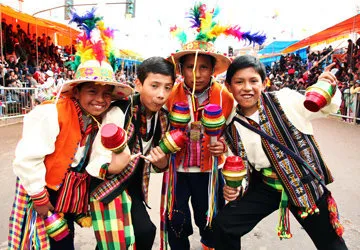
On Thursday, February 12th, the Anata Andina Indigenous ‘Entrance', which will begin at 8:30am. The roots of the Anata Andina celebration lie in a pre-Columbian agricultural celebration celebrating the abundance that the rainy season brings. In rural areas, the tradition continues. Around a hundred groups will descend upon Oruro from the countryside, carrying flowers and agricultural goods. They'll display the unique indigenous music and dance of their respective communities as they parade through the streets of Oruro.
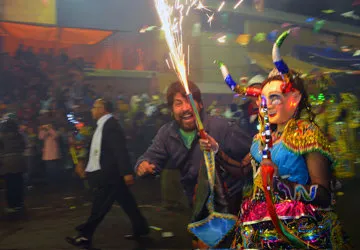
The following day, there will be a convite party thrown in the San Jose Mines in the honor of a curious patron whom the miners affectionately refer to as El Tío. The Uncle is a diabolical figure whose statue can be found in mining tunnels throughout Bolivia, as he is thought to exercise dominion in the dark underground. Miners leave small weekly offerings such as coca leaves or cigarettes in return for protection during their dangerous labor. The party involves live music, folkloric dancing, and much drinking, and is preceded by a Challa, an offering to the pre-Columbian Andean earth deity the Pachamama. As evening falls, the dancers will take to the Carnaval route to dance along the town's main streets, and at daybreak of the following day they'll serenade the Virgin of Socavón in the main square, Plaza 10 de Febrero.
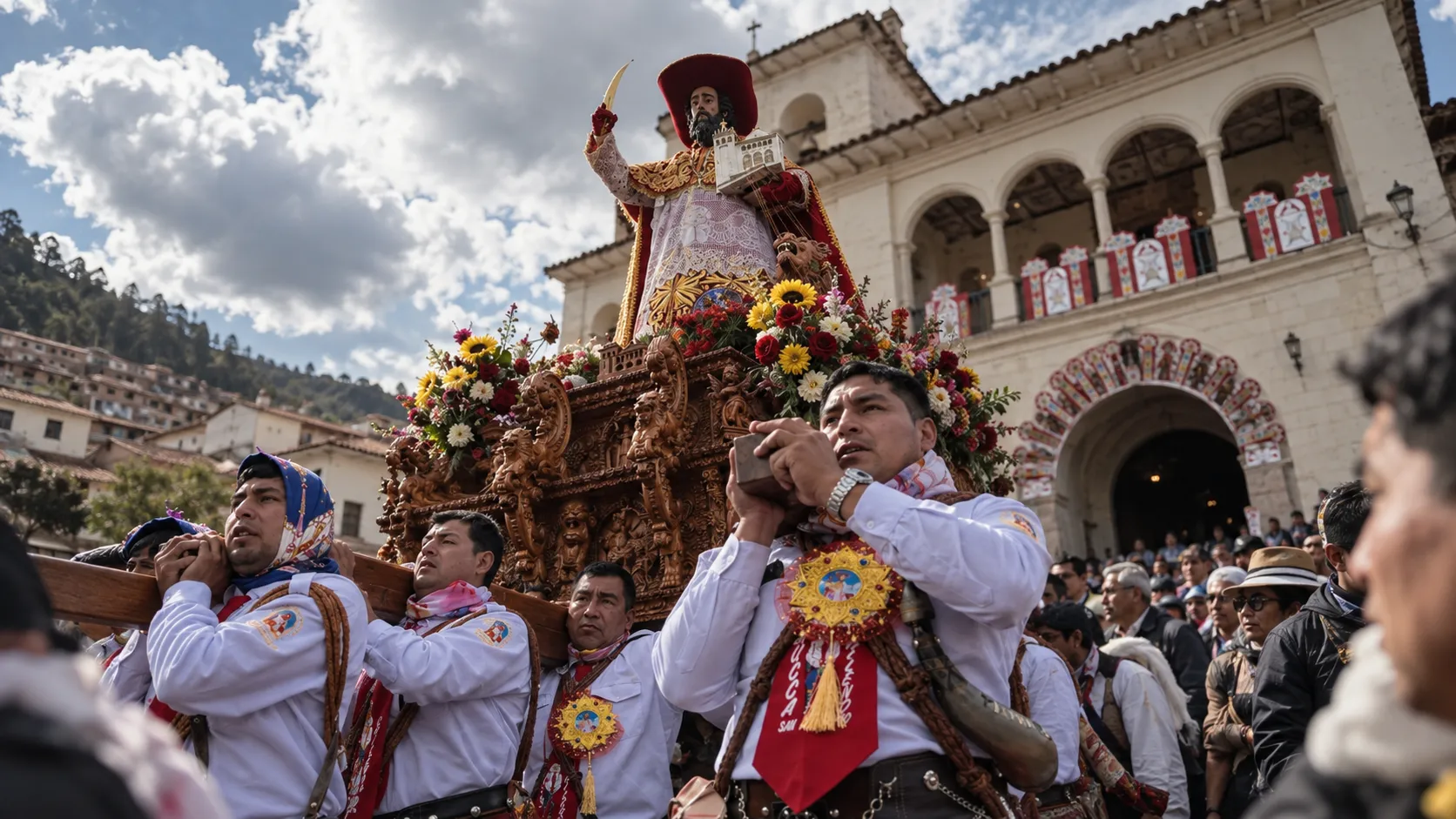
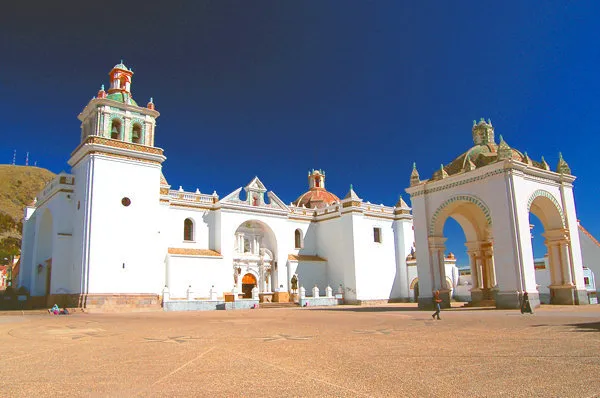
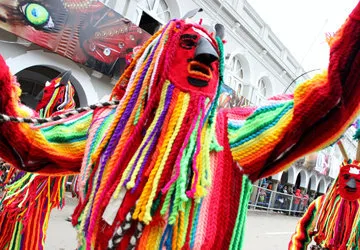
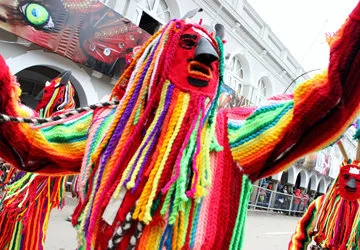
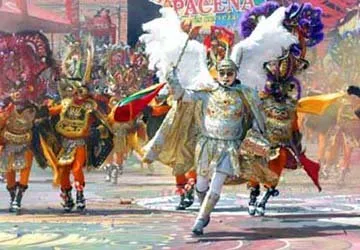
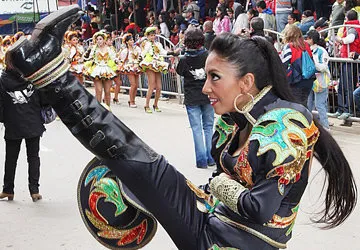
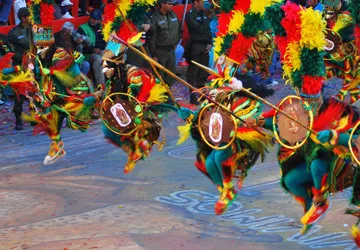
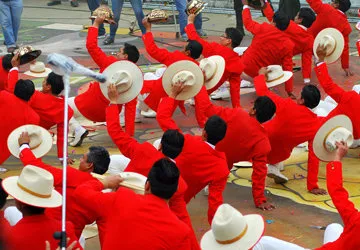
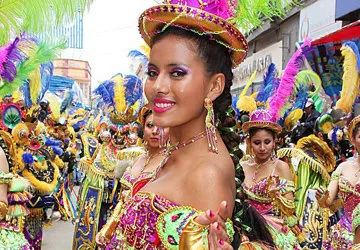
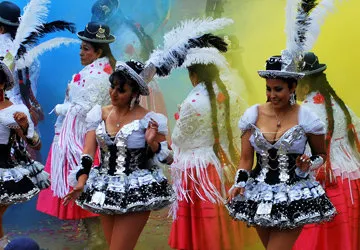
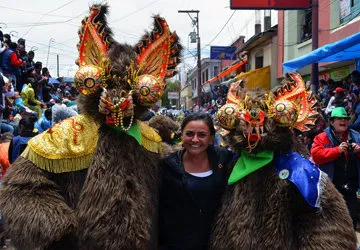
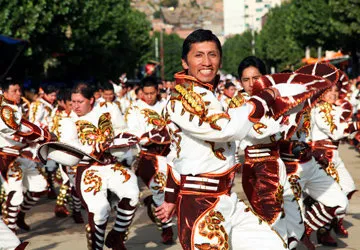
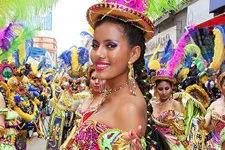
On Saturday, February 14th, the main day of Carnaval, the second ‘Entrance' will take place. Thousands of vibrantly dressed dancers and musicians organized into 48 different folkloric groups will enter the city in pilgrimage to Socavón Sanctuary, beginning at 7am at the corner of Potosí and Aroma. In contrast to the indigenous music and dance of two days earlier, this group will display folkloric traditions that are from the colonial period and represent mestizo traditions. The following day they'll take part in the main parade, following a forty-block route that begins at the same corner and winds through the city's main streets and plazas. This also begins at 7am, but there's no hurry- the dancers, driven by a desire to honor the Virgin, procure blessings, and represent their respective communities and cultural traditions, continue dancing throughout the city for more than 15 hours!
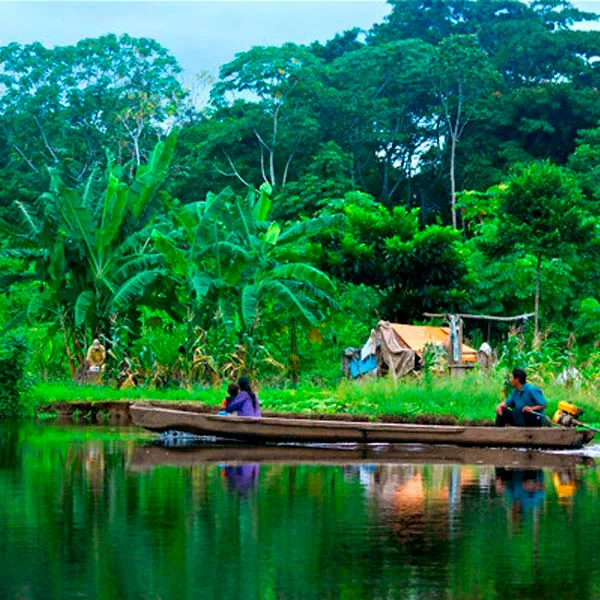
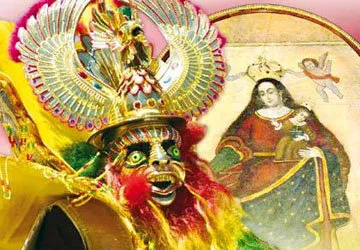
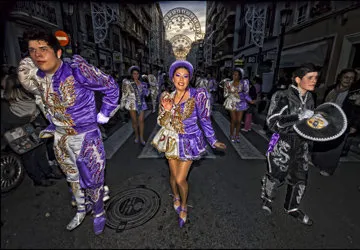
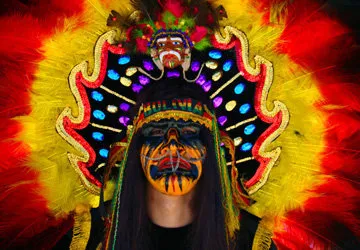
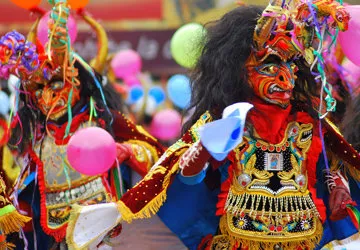
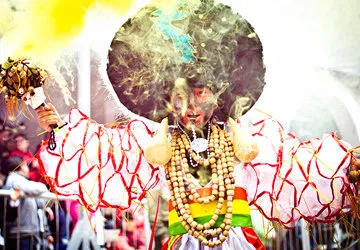
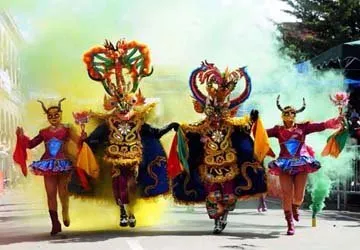
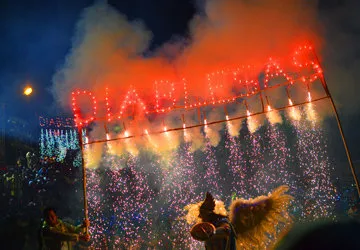
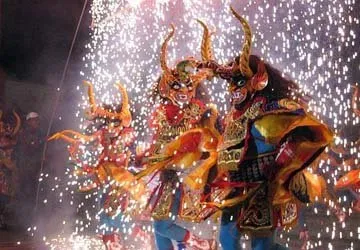
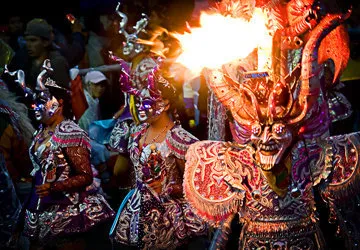
Perhaps the most famed dance of Carnaval is the Diablada, where dancers don elaborate oversized masks to resemble demons. It originated in the region of Lake Titicaca and is most famously danced during the Oruro and La Paz carnavals in Bolivia and the Virgin of Candelaria Festival in Puno, Peru. Many of the principal dances are from the colonial area, including the Morenada, which depicts the slaves who worked in the mines, Caporales, a satirical representation of the mixed-race overseers of black slaves, and the Waka Waka, a parody of the bullfights beloved by the Spanish colonists. Other dances that you'll see have pre-Columbian roots, such as the Suri Sicuris, Andean panpipers wearing ostrich feather crowns. You'll also see dances from the Amazon, although there will be changes this year in that authorities have already begun confiscating animal skins and feathers, and have asked that this year's celebration dramatically reduce its use of authentic wildlife.
Feel free to contact us regarding day trips from La Paz for the main days of the Oruro Carnaval. If nothing else, it'll provide you a little distance from the water and pain battles that plague La Paz during its Carnaval!
Also, please be wary regarding the posters plastered throughout La Paz offering different packages for the Oruro Carnaval, as various fraudulent offers have already been denounced to the police this year.