Cover. Bolivia returns trafficked pre-Inca mummy to Peru.

Tiny Trafficked Pre-Incan Toddler Mummy Returned to Peru

Cover. Bolivia returns trafficked pre-Inca mummy to Peru.
Bolivia returns trafficked mummy to Peru during press confer
Trafficked tiny pre-Inca mummy returns to Peru from Bolivia

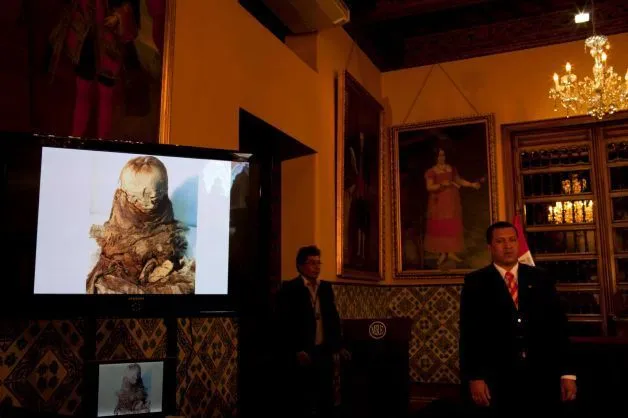
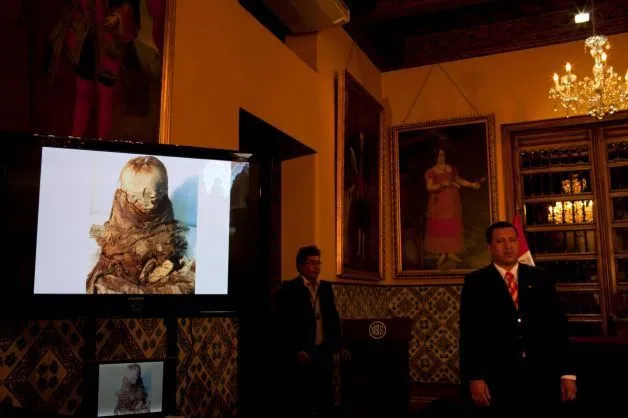
Peru's struggle to protect its cultural heritage continues, with recent victories such as the increasingly popular repatriated Machu Picchu relics  now housed in Cusco, Peru, to the return today of the tiny- no more than a foot tall- pre-Incan mummified toddler who was confiscated in Bolivia two years ago while traffickers attempted to ship it to France.

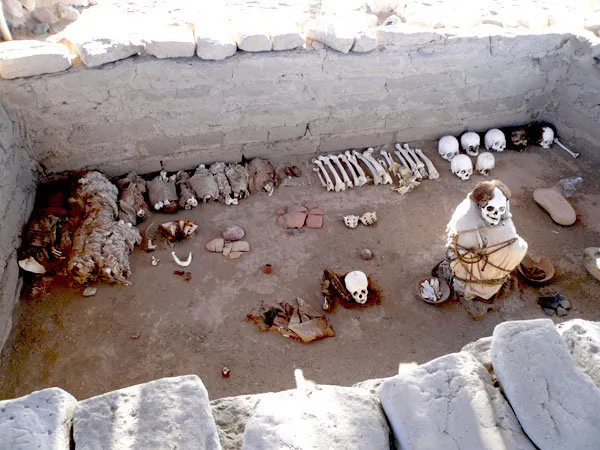
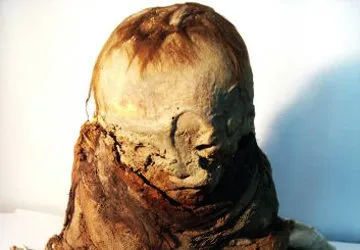
The diminutive 700 year old mummy- only about a foot tall- was a toddler of unidentifiable sex, positioned in the curved sitting but still fetal-like position characterized by Incan and pre-Incan mummies and wrapped in pieces of a camelid cloth, such as llama or alpaca. According to archeologists, it appears to hail from a pre-Incan culture of the Peruvian coast. It was found to have been "completed" with a leg from another child, presumably to raise its commercial value.

To much fanfare, the mummy returned to Peru after a two-year stay in Bolivia, where local authorities confiscated it from a Bolivian citizen attempting to ship it to Compiegne, France. It was formally handed off by Bolivian Cultural Minister Pablo Groux during a press-conference this afternoon. Peruvian Cultural Minister Luis Peirano declared to the gathered press that "this small package is just a sample of the sacking, of the violation of our patrimony and all our inheritance." This victory against trafficking comes after last year's repatriation of a mummy trafficked to Germany more than two decades ago.

Colonial paintings and archeological relics such as pre-Columbian ceramics, precious metals, and textiles are much more common objects of plunder, but according to Blanca Alva, the official from the Peruvian Cultural Ministry charged with the protection of cultural heritage, the uncommon practice of mummy trafficking has been on the rise. "Lately, there has been an increase in this, the trafficking of human remains." Skeletons and mummies were not even expressly prohibited for export until 2009.

It's all part of the fierce struggle Peru has been engaging in to protect, and where necessary, regain, its cultural heritage. When Yale University returned hundreds of priceless artifacts taken from Machu Picchu during the original Hiram Bingham excavations, the news was joyously received by Peruvians. Politicians and laymen alike had long used the pieces' exhibition at the university's museum as an example of the antiquities theft that the country has suffered throughout its history. As the more than 350 pieces arrived at Casa Concha, they were greeted with an Incan ceremony.

A year after the repatriation, more than 70,000 people have visited the exhibit, with Nobel Prize winner Mario Vargas Llosa among the first, and the formerly little-known colonial monument is becoming a requisite stop for visitors to Cusco.
Peru's struggle to protect its cultural heritage continues, with recent victories such as the increasingly popular repatriated Machu Picchu relics  now housed in Cusco, Peru, to the return today of the tiny- no more than a foot tall- pre-Incan mummified toddler who was confiscated in Bolivia two years ago while traffickers attempted to ship it to France.

The diminutive 700 year old mummy- only about a foot tall- was a toddler of unidentifiable sex, positioned in the curved sitting but still fetal-like position characterized by Incan and pre-Incan mummies and wrapped in pieces of a camelid cloth, such as llama or alpaca. According to archeologists, it appears to hail from a pre-Incan culture of the Peruvian coast. It was found to have been "completed" with a leg from another child, presumably to raise its commercial value.

To much fanfare, the mummy returned to Peru after a two-year stay in Bolivia, where local authorities confiscated it from a Bolivian citizen attempting to ship it to Compiegne, France. It was formally handed off by Bolivian Cultural Minister Pablo Groux during a press-conference this afternoon. Peruvian Cultural Minister Luis Peirano declared to the gathered press that "this small package is just a sample of the sacking, of the violation of our patrimony and all our inheritance." This victory against trafficking comes after last year's repatriation of a mummy trafficked to Germany more than two decades ago.

Colonial paintings and archeological relics such as pre-Columbian ceramics, precious metals, and textiles are much more common objects of plunder, but according to Blanca Alva, the official from the Peruvian Cultural Ministry charged with the protection of cultural heritage, the uncommon practice of mummy trafficking has been on the rise. "Lately, there has been an increase in this, the trafficking of human remains." Skeletons and mummies were not even expressly prohibited for export until 2009.

It's all part of the fierce struggle Peru has been engaging in to protect, and where necessary, regain, its cultural heritage. When Yale University returned hundreds of priceless artifacts taken from Machu Picchu during the original Hiram Bingham excavations, the news was joyously received by Peruvians. Politicians and laymen alike had long used the pieces' exhibition at the university's museum as an example of the antiquities theft that the country has suffered throughout its history. As the more than 350 pieces arrived at Casa Concha, they were greeted with an Incan ceremony.

A year after the repatriation, more than 70,000 people have visited the exhibit, with Nobel Prize winner Mario Vargas Llosa among the first, and the formerly little-known colonial monument is becoming a requisite stop for visitors to Cusco.
News, routes, and expert tips

Explore the latest from our Cusco travel blog. Get practical guides, Machu Picchu updates, and fresh trekking and culture recommendations. Everything you need to travel Cusco safely and stylishly in 2026. Your next Andean story starts here!

Inca World Traveñ 48 km on foot: How to reach the Señor de Huanca in Cusco

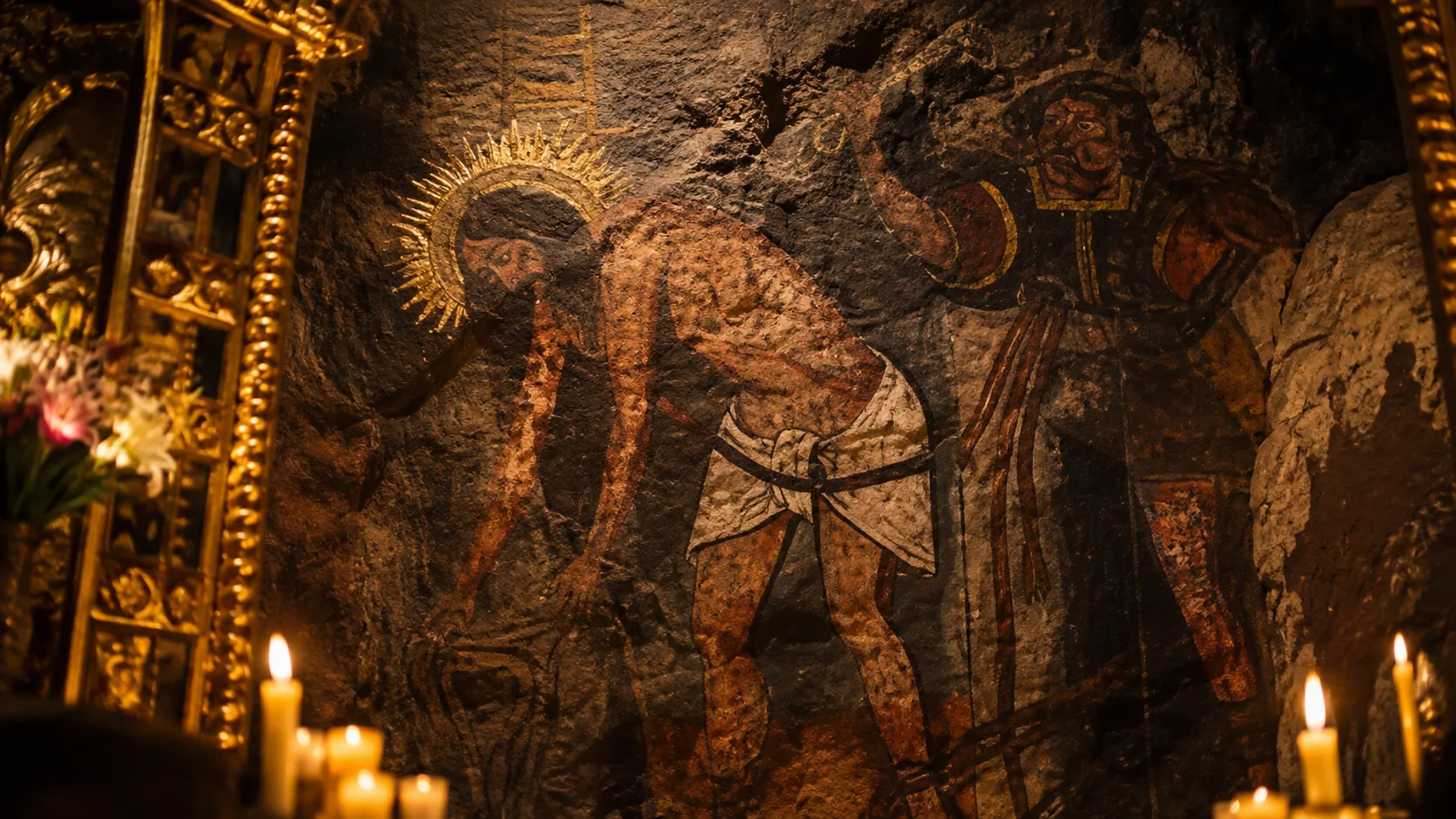
Every September 14, thousands of people walk 48 kilometers from the city of Cusco to the sanctuary of the Señor de Huanca, in the district of San Salvador, province of Calca, at 3,100 m.a.s.l. It is neither a tourist trekking trip nor an organized tour: it is a genuine pilgrimage that sets off at night from San Jerónimo and arrives at dawn on the main day. Here we explain the route, what it physical demands, and why this tradition continues to draw devotees from all over Peru and neighboring countries.

Carla Colon How to Get to Machu Picchu: Complete Guide by Train, Bus, or Hiking

Planning your trip to Peru? Discover the best ways to reach Machu Picchu from Cusco. Compare options by train, bus, budget routes, and legendary trekking trails like the Inca Trail and Salkantay.

Inca World Travel Your ticket to Machu Picchu cannot be lent: What you need to know before the holiday

With the national holiday on August 6 (Battle of Junín) right around the corner, many travelers are organizing last-minute visits to Machu Picchu. Before buying, there is a rule that causes more trouble than it seems: the ticket is personal, unique, and non-transferable. Learn how this rule works at the checkpoint, why you cannot give your ticket away, and how to avoid inconveniences to enjoy your trip to the sanctuary with complete peace of mind.

Are you planning to visit
Machu Picchu in 2026?

We would like to inform our travelers that availability for Circuit 1 and 2 for the months of September, October and November is at 85% of capacity. We recommend booking at least 3 months in advance.

New Circuits and Routes

The Ministry of Culture has consolidated the three main tours. As of 2026, Tour 2 (The Royal Route) remains the only one that allows visitors to take the classic photo from the Guardian’s House. We have adapted all our packages to ensure this access.

Digital Check-In and Biometric Verification

Say goodbye to long check-in lines! Starting this season, entry is faster thanks to the new digital check-in system. Our packages include full management of your personalized tickets to prevent errors on the state platform.

Circuit Ideal for... Clasic photo Difficulty
Circuit 1 (Panoramic) High views and photo posts Yes Low
Circuit 2 (Andean) Complete circuit through the ruins Yes Medium
Circuit 3 (Reality) Persons or reduced movement No Very low

Ask about our Machu Picchu packages

Explore the best of our land

Explore the breathtaking diversity of the Central Andes. From ancient archaeological wonders and surreal high-altitude landscapes to world-class gastronomy and Amazonian adventures, our updated 2026 guides showcase the very best of this premier global destination.