Chan Chan Archeological Site along the Moche Route

Wonders of the Moche Route in Northern Peru

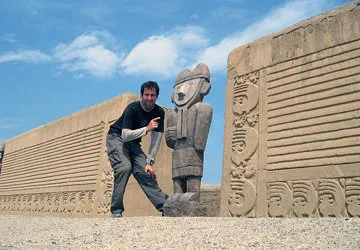
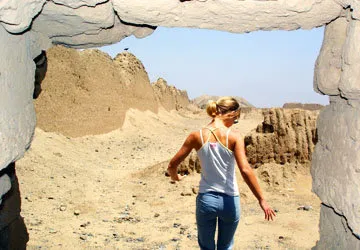
Chan Chan Archeological Site along the Moche Route
Exploring the adobe city of Chan Chan in northern Peru
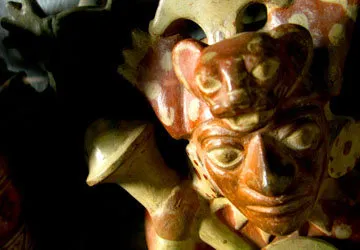
Ceramic pre-Columbian artifact from the Moche Civilization

The Moche Route along the northern coastal desert of Peru comprises the major archeological sites of the Moche, one of the most mysterious and extravagant civilizations to have existed in Peru. Along the way, you visit the  huacas (pyramid temples) and other adobe structures whose elaborate murals and friezes, mummies, ceramics and gold works all display the complex iconography of an agricultural society with a sophisticated, albeit violent, culture.


The Moche civilization was one of the most mysterious and extravagant to have existed in Peru. It flourished from around 100AD to 800AD, and its adobe huacas (pyramid temples) still dot the landscape of the northern coastal desert despite having suffered excessive looting and damage over the centuries. The elaborate painted ceramics, gold works, and adobe structures with murals and friezes all display the complex iconography of an agricultural society with a sophisticated, albeit violent, culture. The touristic circuit known as the Moche Route runs through the La Libertad and Lambayeque regions of northern Peru and includes all of the major Moche archeological sites.

It all begins in the coastal desert near the city of Trujillo (or, if you prefer, you can base your visits from the quaint fisherman's town of Huanchaco), where one finds the Temples of the Sun and Moon, in the area which once served as the Moche capital. Archeologists believe that the Temple of the Sun was the largest pre-Columbian adobe structure built in the Americas and it served as a royal residence and burial chamber, as well as a military and administrative center. The smaller Temple of the Moon was primarily a ceremonial and religious center, as well as a sacrificial site.

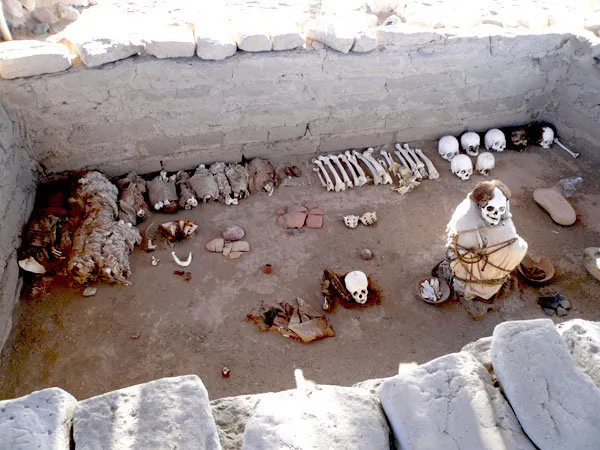
Chan Chan (5km west of Trujillo) is South America's largest pre-Columbian city. It was constructed by the Chimor, the Chimú Kingdom which grew out of the Moche civilization, and served as the capital. Fabulously wealthy, it contained ten thousand structures, some with walls 30ft high. The Inca conquest of the 1470s brought Chan Chan's days of splendor to an end, and the city was mostly abandoned by the time of the Spanish arrival in 1532. The Spanish formed mining companies to extract the city's astounding amounts of silver and gold.

The Lady of Cao is a heavily tattooed Moche mummy discovered at El Brujo archeological site north of Trujillo in 2006. The wealth of ceremonial items, weapons, and jewelry in her tomb suggest that she was a high-ranking priestess or even a ruler. The monument of El Brujo itself is known for its multicolored reliefs and mural paintings.

In the city of Chiclayo, one can find the museums pertaining to the most significant archeological finding in the Americas of the last fifty years, the Lord of Sipán. Discovered in 1987, it was an incredibly important find because the tomb was intact and never raided. His elaborate ornaments of gold, silver, and semi-precious stones included headdresses, necklaces, nose and ear rings, a face mask, pectoral, and more. Around the mummy were the mummies of three young women, a child, and thre warriors with amputated feet, as if to prevent them from abandoning their charge. The tomb itself is found at Huaca Rajada in part of the Chiclayo metropolitan area known as Lambayeque. (Throughout the twenty years following the initial discovery, fourteen more tombs would be unearthed at Huaca Rajada.)
The Moche Route along the northern coastal desert of Peru comprises the major archeological sites of the Moche, one of the most mysterious and extravagant civilizations to have existed in Peru. Along the way, you visit the  huacas (pyramid temples) and other adobe structures whose elaborate murals and friezes, mummies, ceramics and gold works all display the complex iconography of an agricultural society with a sophisticated, albeit violent, culture.


The Moche civilization was one of the most mysterious and extravagant to have existed in Peru. It flourished from around 100AD to 800AD, and its adobe huacas (pyramid temples) still dot the landscape of the northern coastal desert despite having suffered excessive looting and damage over the centuries. The elaborate painted ceramics, gold works, and adobe structures with murals and friezes all display the complex iconography of an agricultural society with a sophisticated, albeit violent, culture. The touristic circuit known as the Moche Route runs through the La Libertad and Lambayeque regions of northern Peru and includes all of the major Moche archeological sites.

It all begins in the coastal desert near the city of Trujillo (or, if you prefer, you can base your visits from the quaint fisherman's town of Huanchaco), where one finds the Temples of the Sun and Moon, in the area which once served as the Moche capital. Archeologists believe that the Temple of the Sun was the largest pre-Columbian adobe structure built in the Americas and it served as a royal residence and burial chamber, as well as a military and administrative center. The smaller Temple of the Moon was primarily a ceremonial and religious center, as well as a sacrificial site.

Chan Chan (5km west of Trujillo) is South America's largest pre-Columbian city. It was constructed by the Chimor, the Chimú Kingdom which grew out of the Moche civilization, and served as the capital. Fabulously wealthy, it contained ten thousand structures, some with walls 30ft high. The Inca conquest of the 1470s brought Chan Chan's days of splendor to an end, and the city was mostly abandoned by the time of the Spanish arrival in 1532. The Spanish formed mining companies to extract the city's astounding amounts of silver and gold.

The Lady of Cao is a heavily tattooed Moche mummy discovered at El Brujo archeological site north of Trujillo in 2006. The wealth of ceremonial items, weapons, and jewelry in her tomb suggest that she was a high-ranking priestess or even a ruler. The monument of El Brujo itself is known for its multicolored reliefs and mural paintings.

In the city of Chiclayo, one can find the museums pertaining to the most significant archeological finding in the Americas of the last fifty years, the Lord of Sipán. Discovered in 1987, it was an incredibly important find because the tomb was intact and never raided. His elaborate ornaments of gold, silver, and semi-precious stones included headdresses, necklaces, nose and ear rings, a face mask, pectoral, and more. Around the mummy were the mummies of three young women, a child, and thre warriors with amputated feet, as if to prevent them from abandoning their charge. The tomb itself is found at Huaca Rajada in part of the Chiclayo metropolitan area known as Lambayeque. (Throughout the twenty years following the initial discovery, fourteen more tombs would be unearthed at Huaca Rajada.)
News, routes, and expert tips

Explore the latest from our Cusco travel blog. Get practical guides, Machu Picchu updates, and fresh trekking and culture recommendations. Everything you need to travel Cusco safely and stylishly in 2026. Your next Andean story starts here!

Inca World Travel Seven Natural Wonders Hidden By Peru Discover Now

Ready to explore beyond Machu Picchu? Discover the 7 natural wonders of Peru, a country brimming with hidden ecological treasures. From deep turquoise lagoons and the famous rainbow mountain of colors to surreal stone forests and vast rivers, these stunning destinations are waiting for you. Get ready to dive into the raw, untouched beauty of South America!

Inca World Historic Center of Cusco Tours: The Ideal Cultural Walking Itinerary

Cusco is a city meant to be explored on foot. Every street holds a story, and as you walk, you feel as though you aren't just "visiting" a city, but rather walking through layers of a living past: the Inca world and the Spanish Baroque, seamlessly blended in stone.That is why, if it is your first time in Cusco, the historic center is one of the best ways to kick off your trip. Additionally, sitting at around 3,400 meters 11,150 feet above sea level, a relaxed stroll helps you acclimate to the altitude, making you feel much better before taking on longer or more demanding excursions.

Inca World Travel How to Travel from Pisco to Cusco: Flights, Routes, and Travel Tips

Are you planning your trip to Peru and want to combine the magic of the Ica Desert with the majesty of the Andes? Connecting the southern coast with the heart of the world is one of the best decisions you can make.

Here, we’ll tell you everything you need to know about the route from Pisco to Cusco, flight options, and how to plan your itinerary so you don’t miss a thing.

Are you planning to visit
Machu Picchu in 2026?

We would like to inform our travelers that availability for Circuit 1 and 2 for the months of September, October and November is at 85% of capacity. We recommend booking at least 3 months in advance.

New Circuits and Routes

The Ministry of Culture has consolidated the three main tours. As of 2026, Tour 2 (The Royal Route) remains the only one that allows visitors to take the classic photo from the Guardian’s House. We have adapted all our packages to ensure this access.

Digital Check-In and Biometric Verification

Say goodbye to long check-in lines! Starting this season, entry is faster thanks to the new digital check-in system. Our packages include full management of your personalized tickets to prevent errors on the state platform.

Circuit Ideal for... Clasic photo Difficulty
Circuit 1 (Panoramic) High views and photo posts Yes Low
Circuit 2 (Andean) Complete circuit through the ruins Yes Medium
Circuit 3 (Reality) Persons or reduced movement No Very low

Ask about our Machu Picchu packages

Explore the best of our land

Explore the breathtaking diversity of the Central Andes. From ancient archaeological wonders and surreal high-altitude landscapes to world-class gastronomy and Amazonian adventures, our updated 2026 guides showcase the very best of this premier global destination.